
• Home
  • About
  • First Step Counseling

Lord, have mercy…

~ My life. My story.

Lord, have mercy…

Tag Archives: pain

Lent Day 31: God’s Heart

24 Wednesday Mar 2021

Posted by Janean Tinsley in Lent

≈ Leave a comment

Tags

Jesus Christ, Lent, pain

Then Judas Iscariot, who was one of the twelve, went to the chief priests in order to betray him to them. And when they heard it, they were glad and promised to give him money. And he sought an opportunity to betray him. And on the first day of Unleavened Bread, when they sacrificed the Passover lamb, his disciples said to him, “Where will you have us go and prepare for you to eat the Passover?” And he sent two of his disciples and said to them, “Go into the city, and a man carrying a jar of water will meet you. Follow him, and wherever he enters, say to the master of the house, ‘The Teacher says, Where is my guest room, where I may eat the Passover with my disciples?’ And he will show you a large upper room furnished and ready; there prepare for us.” And the disciples set out and went to the city and found it just as he had told them, and they prepared the Passover. And when it was evening, he came with the twelve. And as they were reclining at table and eating, Jesus said, “Truly, I say to you, one of you will betray me, one who is eating with me.” They began to be sorrowful and to say to him one after another, “Is it I?” He said to them, “It is one of the twelve, one who is dipping bread into the dish with me. For the Son of Man goes as it is written of him, but woe to that man by whom the Son of Man is betrayed! It would have been better for that man if he had not been born.” — Mark 14:10-21

We are quite close to the beginning of Holy Week. A lot happened during that week. It went from joy to tragedy to triumph. We should all be feeling the coming anticipation. I hope as the week draws near, you are feeling closer to Jesus, perhaps more than ever before.

Hesed is found some 250 times in the Old Testament. Many biblical words such as mercy, compassion, love, grace, and faithfulness relate to the Hebrew word hesed (חֶסֶד), but none of these completely summarize the concept. Hesed is not merely an emotion or feeling but involves action on behalf of someone who is in need. Hesed describes a sense of love and loyalty that inspires merciful and compassionate behavior toward another person. Hesed surpasses ordinary kindness and friendship. It is the inclination of the heart to show “amazing grace” to the one who is loved. Hesed runs deeper than social expectations, responsibilities, fluctuating emotions, or what is deserved or earned by the recipient. Hesed finds its home in committed, familial love, and it comes to life in actions. The message of the gospel—God’s act of forgiveness and salvation in Jesus—is rooted in hesed.

The deepest longing of our soul is the all-satisfying hesed of God—not in the abstract, but first-hand knowledge and experience, a tasting of God’s hesed. Have you been delivered by the hand of God, tasted his mercy, seen his power, heard his word, felt his presence? The degree to which we have known the presence and power of God is the degree to which we get a sense for what it meant that Jesus was the Son of God, and how devastating it must have been to bear the judgment of God against sin. All lament
leads us to Jesus, in whom our sorrow and pain finds ultimate identification and hope.
The culmination of good and evil came down to Jesus was on the cross. The physical pain was excruciating, yet it was nothing compared to the shock and horror of being forsaken by the Father. You see, the wrath of God was poured out on Jesus, the whole weight of the world’s guilt bearing down on his shoulders. This is the wrath we should have experienced. This is the pain we should have felt. But Jesus felt the pain and he internalized our shame. He, who knew no sin, became sin (2 Corinthians 5:17).

In that moment, he took up the lament of King David: “My God, my God, why have you forsaken me?” (Mark 15:34). When he said this he not only took our sin upon himself, but also voiced all our laments. For underlying all our laments are two questions: “God, where are you?” and, “God, if you love me, then why?” For the first time in all of eternity, Jesus felt the absence of the Father’s presence and the uncertainty of his love. God could not look upon the sin that Jesus became.

Why did it have to be this way? If Jesus was God’s answer to ages of laments, how did he end up in the most lamentable position of all?
One approach to the question is to consider why so many ultimately rejected him, even his own people. The disciples, too, regularly stumbled over their expectations. They hoped the Messiah would conquer the Romans and vindicate Israel. Instead, he predicted the destruction of the temple and died for the Romans. They wanted the Messiah to give them answers. Jesus gave himself. He predicted his own destruction, and then endured it in order to conquer our real enemies: Satan, sin, and death. Jesus did not take away lamenting. He took it up. Having endured the cross, he secured for us the one thing we need more than solutions: the presence of God.
“Lament is the path that takes us to the place where we discover that there is no complete answer to pain and suffering, only Presence” (Michael Card).

Share this:

  • Click to share on X (Opens in new window) X
  • Click to share on WhatsApp (Opens in new window) WhatsApp
  • More
  • Click to share on Facebook (Opens in new window) Facebook
  • Click to print (Opens in new window) Print
  • Click to email a link to a friend (Opens in new window) Email
  • Click to share on LinkedIn (Opens in new window) LinkedIn
  • Click to share on Reddit (Opens in new window) Reddit
  • Click to share on Pinterest (Opens in new window) Pinterest
  • Click to share on X (Opens in new window) X
Like Loading...

Lent Day 29: It’s fine. Everything’s fine.

22 Monday Mar 2021

Posted by Janean Tinsley in Lent, mental health

≈ Leave a comment

Tags

faith, God, Jesus Christ, Lent, pain, sin

I cry aloud to God, aloud to God, that he may hear me. In the day of my trouble I seek the Lord; in the night my hand is stretched out without wearying; my soul refuses to be comforted. I think of God, and I moan; I meditate, and my spirit faints. You keep my eyelids from closing; I am so troubled that I cannot speak. —Psalm 77

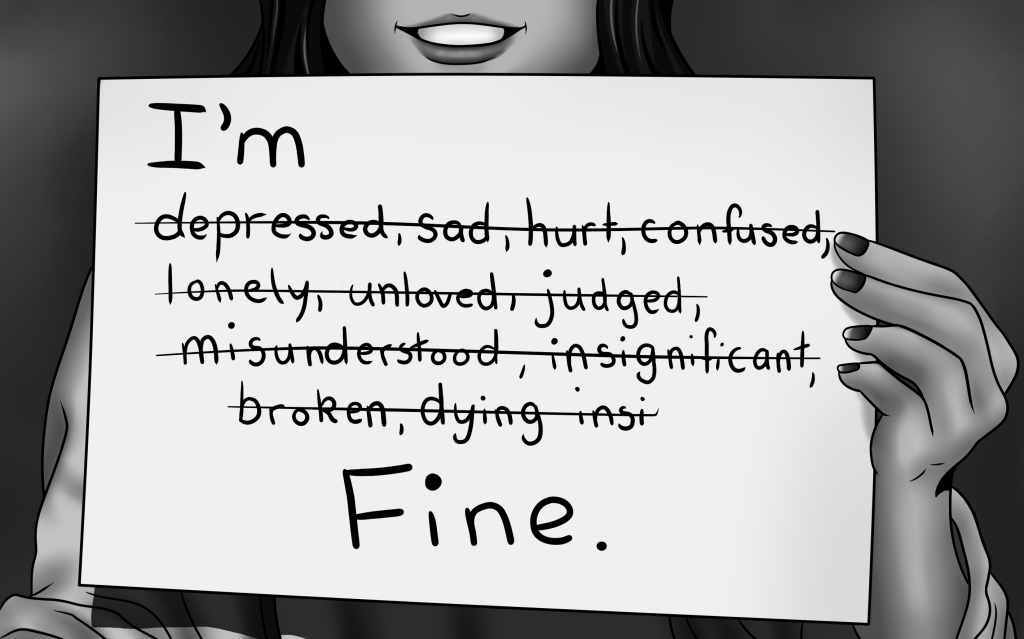
“I’m fine. It’s fine. Everything is fine.” So many of my clients have recited these words for so long they have forgotten how to acknowledge their real pain. I have found that people will quietly endure pain described in this psalm for weeks, months, or even years on end, until they finally become overwhelmed. This often takes the form of a divorce, an arrest, or a suicide attempt.

What do we do during the “day of trouble?” We cry aloud to God to find comfort, but for some reason, “my soul refuses to be comforted.” We lose sleep, and we cannot even describe the anguish we are in. On top of all of this, we experience a theological crisis: “God promised to never leave or forsake me, but now he has turned his back on me.”

Occasionally, clients will reveal that they have reached out to God during dark times, but they felt all they received was silence. They asked for relief from the pain but they feel forgotten. They are praying like they’ve never prayed before, but still their pain overwhelms. “Has God forgotten to be gracious?” (v. 9).

Perhaps that is the whole point. Scripture reminds us over and over that God is merciful and abounding in steadfast love (Exodus 34:6–7), that God never changes (Hebrews 13:8), and that God desires an intimate relationship with his people (Isaiah 43:1; Jeremiah 31:33). Scripture assures us that God is our everlasting hope. Because of these promises, I do not believe that God causes our suffering. I do believe He can certainly use our suffering so that we might “cry aloud to God,” “think of God,” and “meditate and search my spirit.” The psalmist reminds us that even amid our suffering, it is out of God’s character to spurn or abandon, to be unloving or to withhold compassion. Even on our darkest days, God is inseparable from his goodness and mercy. For that, as we draw ever closer to the cross, we can persevere.

Share this:

  • Click to share on X (Opens in new window) X
  • Click to share on WhatsApp (Opens in new window) WhatsApp
  • More
  • Click to share on Facebook (Opens in new window) Facebook
  • Click to print (Opens in new window) Print
  • Click to email a link to a friend (Opens in new window) Email
  • Click to share on LinkedIn (Opens in new window) LinkedIn
  • Click to share on Reddit (Opens in new window) Reddit
  • Click to share on Pinterest (Opens in new window) Pinterest
  • Click to share on X (Opens in new window) X
Like Loading...

Lent Day 28: A Gift

21 Sunday Mar 2021

Posted by Janean Tinsley in Lent

≈ Leave a comment

Tags

God, Jesus Christ, Lent, pain

Now it came to pass, when the time had come for Him to be received up, that He steadfastly set His face to go to Jerusalem, and sent messengers before His face. And as they went, they entered a village of the Samaritans, to prepare for Him. But they did not receive Him, because His face was set for the journey to Jerusalem. And when His disciples James and John saw this, they said, “Lord, do You want us to command fire to come down from heaven and consume them, just as Elijah did?” But He turned and rebuked them, and said, “You do not know what manner of spirit you are of. For the Son of Man did not come to destroy men’s lives but to save them.” And they went to another village. — Luke 9:51-56

Lent is a time where we give lots of thought to the suffering that Jesus endured. For us, however, we know the outcome—an empty tomb. It was different for the disciples; it was a testing of faith. We see what God was doing in the garden of Gethsemane, and we know the great necessity of the cross of Christ. Otherwise, we too would fall asleep and run for safety. It’s easy to look back.

“When the days drew near for him to be taken up, he set his face to go to Jerusalem” (Luke 9:51). Knowing what had to happen, Jesus stayed the course. If we are to have a serious reflection on his suffering, we must account for the fact that our Lord looked forward, never back.
We look back all the time, longing for comforts past, wondering what might have been. I’ve done it even as recently as reflecting on the lost year of Covid. Even though we have taken up life with Jesus, seasons of suffering challenge our resolve and fix our attention to how things used to be or how we imagine they might be. Our hunger for restoration and relief from burdens turns our heart to the past, but Jesus has only an eye for what is set before him.

The Isrealites experienced this in the 40 years they spent wandering in the desert. They argued with Moses, idealizing their life in Egypt and questioning the goodness of the Lord. They complained about the Lord’s provision, not because he didn’t provide, but because they weren’t content with what he provided. Oh how that truth can sting!

The paradox of suffering is that it is actually a gift – one we might like at times to give back – but a gift nonetheless. God gives us suffering as a way of giving us Himself, for it is in our suffering that we become acutely aware of His presence and power. Difficulties empty us of our self-reliance so that we might soak in what it means that we are children of God, chosen by God and in covenant relationship with Him—the very covenant purchased by Christ’s blood.
The Israelites in the wilderness and Christ on the cross both stand as a testament, old and new, that God does not forsake His people.

Ultimately, suffering is about learning to receive whatever God has placed in our hands as a blessing. Honestly, that is quite difficult in painful moments. For Jesus, the journey to Jerusalem was a gift. Gethsemane and Golgotha were gifts. They were not easy gifts to receive, which is why he had to say, “Not my will, but yours” (Mark 14:36). And it is why he taught us to pray, “Your kingdom come, your will be done” (Matthew 6:10), because if we are not looking for God’s kingdom come, we always be looking back for our kingdom gone.

The season of Lent is a gift. Take time to receive it.

Share this:

  • Click to share on X (Opens in new window) X
  • Click to share on WhatsApp (Opens in new window) WhatsApp
  • More
  • Click to share on Facebook (Opens in new window) Facebook
  • Click to print (Opens in new window) Print
  • Click to email a link to a friend (Opens in new window) Email
  • Click to share on LinkedIn (Opens in new window) LinkedIn
  • Click to share on Reddit (Opens in new window) Reddit
  • Click to share on Pinterest (Opens in new window) Pinterest
  • Click to share on X (Opens in new window) X
Like Loading...

Lent Day 26: Promises Kept

18 Thursday Mar 2021

Posted by Janean Tinsley in Lent

≈ Leave a comment

Tags

faith, God, Jesus Christ, Lent, pain

Abram was ninety-nine years old when the Lord appeared to him again and said, “I am God All-Powerful. If you obey me and always do right, I will keep my solemn promise to you and give you more descendants than can be counted.” Abram bowed with his face to the ground, and God said: I promise that you will be the father of many nations. That’s why I now change your name from Abram to Abraham. I will give you a lot of descendants, and in the future they will become great nations. Some of them will even be kings. I will always keep the promise I have made to you and your descendants, because I am your God and their God. — Genesis 17:1-7

Can we know for sure that God keeps his promises? It’s very easy to say, “I promise,” but then waffle if it becomes too difficult to keep. Could this ever happen with God?

God made a series of promises to Abraham: He promised to give him many descendants and make him into a great nation, to bless him and make his name great, and to bless all the families of the earth through him. He also promised to give the descendants of Abraham a particular land. But Abraham, like any of us, was unsure. How could such promises be kept?

Abraham asked God some questions: “O Lord GOD, what will you give me, for I continue childless,” and, “O Lord GOD, how am I to know that I shall possess [the land]” (15:2)?

These are fair questions. Wouldn’t you wonder the same? In answer to these questions, God did something that seems strange to us in our cultural and historical context. He had Abraham sacrifice some animals. He was told to cut them in half and then lay the pieces of the animals across from each other. Then Abraham fell into a deep sleep. During this sleep, a smoking fire pot and flaming torch passed between the pieces. This ceremony, common in the ancient Near East, was called “cutting a covenant.”

Two parties entering into a binding agreement or covenant with one another would cut an animal in pieces and pass between the pieces to inaugurate the covenant. The ceremony signified that the two parties were promising to fulfill the terms of the covenant. If they failed to keep the promises of the covenant, they were saying, “May we become like this animal.” It’s like they were saying, “I promise. Cross my heart and hope to die.” The sacrificial ceremony was literally a pledge of one’s life to keep the promises of the covenant.

That’s quite a promise! So when the smoking fire pot and flaming torch (which were symbols of God’s presence) passed between the pieces of dead animals, God himself was assuming responsibility to make sure that all the promises of the covenant were kept. O. Palmer Robertson writes, “The solemn ceremony of self-malediction provides the Lord’s reply [to Abraham’s questions]: ‘I promise. I solemnly commit myself as Almighty God. Death may be necessary. But the promises of the covenant shall be fulfilled’.”

Y’all! That thought should have chills running up your spine! God was saying, “May I be torn to pieces like these animals if the covenant between me and Abraham’s descendants is broken.”

Abraham’s descendants would be unfaithful to God and his covenant. But, God kept his promise. He had sworn on his life to bless Abraham. So, the blessing for Abraham and his descendants (which includes us as Christians) was made possible by the curse of death that fell on Jesus.

In Jesus, God the Son took on flesh, and his flesh was torn apart in order to keep his covenant promises to Abraham (and us). Jesus, the covenant- keeper, sacrificially offered himself for us: “Take, eat; this is my body. Drink of this cup, all of you, for this is my blood of the covenant, which is poured out for many for the forgiveness of sins” (Matthew 26:26-28). The blood of Jesus, the sacrificial Lamb of God, is our assurance that God keeps his promises.

Share this:

  • Click to share on X (Opens in new window) X
  • Click to share on WhatsApp (Opens in new window) WhatsApp
  • More
  • Click to share on Facebook (Opens in new window) Facebook
  • Click to print (Opens in new window) Print
  • Click to email a link to a friend (Opens in new window) Email
  • Click to share on LinkedIn (Opens in new window) LinkedIn
  • Click to share on Reddit (Opens in new window) Reddit
  • Click to share on Pinterest (Opens in new window) Pinterest
  • Click to share on X (Opens in new window) X
Like Loading...

Lent Day 25: Holy Discomfort

17 Wednesday Mar 2021

Posted by Janean Tinsley in Lent

≈ Leave a comment

Tags

faith, Jesus Christ, Lent, pain

I’m posting a devotion from Louie Giglio today. It is so beautifully stated. Enjoy.

Faith thrives in holy discomfort. The greatest moments in life can often result from some of the most uncomfortable decisions being made.

In fact, the gospel is rooted in a place of discomfort — Christ’s discomfort. The cross brought pain to Jesus in the same breath it brought freedom to us. We are alive because of Christ’s discomfort. We can fully live because of the rugged cross. Christ endured what was uncomfortable so we could become the sons and daughters of God. This is our story. People ask, “What does it mean to be a Christian?” It means to put our faith in the work of Jesus. What is the work of Jesus? That He came to the earth. He lived. He was crucified. He was resurrected. He ascended into heaven. He sent the Spirit of God, and He’s now living inside of us. This is the gospel. This is what we believe, and it all hinges around a very uncomfortable moment.

Somehow as a people of God, if we’re not careful, we can sing songs about the uncomfortable moments of Jesus while we live in the very comfortable moment of us. Thank you, Jesus — you took it all. But we forget what it truly means to identify with Christ. The Bible tells us that as Christ followers, we identify with His crucifixion just as much as we identify with His resurrection.

Paul wrote in Galatians 2:20, “I have been crucified with Christ and I no longer live, but Christ lives in me. The life I now live in the body, I live by faith in the Son of God, who loved me and gave himself for me.” That means our dreams and plans become merged with Christ’s when we remember that death and life are both part of Christ’s work.

Can you name anything in the life of faith that’s completely comfortable? Resisting sin? Nope, not comfortable. Being transformed into the image of Christ? No, not comfortable either. Joining with Christ on His mission? No. Wondrous, but not always comfortable. That’s why Paul says in 2 Corinthians 12:10, “For Christ’s sake, I delight in weaknesses, in insults, in hardships, in persecutions, in difficulties. For when I am weak, then I am strong.”

Share this:

  • Click to share on X (Opens in new window) X
  • Click to share on WhatsApp (Opens in new window) WhatsApp
  • More
  • Click to share on Facebook (Opens in new window) Facebook
  • Click to print (Opens in new window) Print
  • Click to email a link to a friend (Opens in new window) Email
  • Click to share on LinkedIn (Opens in new window) LinkedIn
  • Click to share on Reddit (Opens in new window) Reddit
  • Click to share on Pinterest (Opens in new window) Pinterest
  • Click to share on X (Opens in new window) X
Like Loading...

Lent Day 19: Suffering

11 Thursday Mar 2021

Posted by Janean Tinsley in Lent

≈ Leave a comment

Tags

faith, God, Jesus Christ, Lent, pain, sin

Moses went to the mountain of the Lord in the Sinai wilderness and stayed there for 40 days and nights in prayer and fasting (Exodus 24:18). Elijah, after he was fed with bread from heaven, journeyed through the wilderness without any food for 40 days to the mountain of God (1 Kings 19:8). Jesus was without any food in the wilderness for 40 days to prepare himself for the mission that the Father had sent him to accomplish.

Forty days shows up a lot in scripture. And often, it involved suffering. The forty days of Lent parallels the forty days that Jesus went without food in the wilderness. It is one of the ways we identify with his suffering through the practice of self- denial. Whether it’s food or TV or “me-time,” we deny ourselves particular comforts and pleasures as a way of remembering what Jesus endured for us. The point is not to manufacture suffering, as if we could earn some kind of righteousness through self-denial. The point is to rid our daily lives of anything that takes more precedence than our Savior.


“Jesus, full of the Holy Spirit, returned from the Jordan and was led by the Spirit in the wilderness for forty days, being tempted by the devil. And he ate nothing during those days. And when they were ended, he was hungry” (Luke 4:1-2).

The striking thing in this story is that Jesus went into the desert under the direction of the Holy Spirit. He chose this suffering. Indeed, his whole life was a choice to enter into our suffering. Why? Because God loves us so much! The testimony of Scripture is that Christians need to embrace suffering as part of our calling and endure it as part of our witness:
» “Beloved, do not be surprised at the fiery trial when it comes upon you to test you, as though something strange were happening to you” (1 Peter 4:12).
» “For it has been granted to you that for the sake of Christ you should not only believe in him but also suffer for his sake” (Philippians 1:29).
» “Indeed, all who desire to live a godly life in Christ Jesus will be persecuted” (2 Timothy 3:12).

Our wilderness is not literal, but it is very real. We are tempted – perhaps even determined – to sustain ourselves, to escape our vulnerability, and to chase our aspirations without thought of others.

But Jesus offers us another way. Despite the suffering he reveals to us what it means to embrace our humanity without short cuts. A minister wrote a book called What’s the Least I Can Believe and Still Be A Christian. It’s a portrayal of the very thing Jesus taught us not to do. Don’t give just a little to God in order to check a box. Give your entire life. All of it! There are no shortcuts because Jesus took no shortcuts.
“The devil said to him, ‘If you are the Son of God, command this stone to become bread’” (Luke 4:3). Certainly Jesus could have done this, but the lack of bread revealed a deeper hunger for God, and a deeper satisfaction of being sustained by God.


“And the devil took him up and showed him all the kingdoms of the world in a moment of time, and said to him … worship me, it will all be yours’” (4:5-7). It would all be his eventually, but to have it now would be to have it without suffering and death. How often do we worship whatever promises to give us what we want now, without inconvenience or discomfort? But Jesus worships God alone, not because it is easier, but because it is truer and far better.

“And [the devil] took him to Jerusalem and set him on the pinnacle of the temple and said to him, ‘If you are the Son of God, throw yourself down from here, for it is written, ‘He will command his angels concerning you, to guard you’” (4:9-10). Had Jesus done this, he could have ended all this temptation and trial. How often do we call upon God for miraculous solutions to our suffering, not because we trust him in our circumstance but because we want out of it? But Jesus would not put God to the test.


We live into our identity by surrendering to the Holy Spirit, wherever he may lead us. This season is about waiting, maybe even suffering the loss of things that have come to define us, because we know that our life is dust, and because we are looking forward to resurrection life.

Share this:

  • Click to share on X (Opens in new window) X
  • Click to share on WhatsApp (Opens in new window) WhatsApp
  • More
  • Click to share on Facebook (Opens in new window) Facebook
  • Click to print (Opens in new window) Print
  • Click to email a link to a friend (Opens in new window) Email
  • Click to share on LinkedIn (Opens in new window) LinkedIn
  • Click to share on Reddit (Opens in new window) Reddit
  • Click to share on Pinterest (Opens in new window) Pinterest
  • Click to share on X (Opens in new window) X
Like Loading...

Lent Day 15: Sacrifice to Celebration

06 Saturday Mar 2021

Posted by Janean Tinsley in Lent

≈ Leave a comment

Tags

faith, God, Jesus Christ, Lent, pain, sin

As they went out, they came upon a man of Cyre’ne, Simon by name; this man they compelled to carry his cross. — Matthew 27:32

I have always been drawn to Lent. I can’t really articulate why except that Lent encourages some significant self reflection. Too often, if done right, these reflections can lead to change and sacrifice.

Lent is filled with sacrifice. The point, of course, is to reflect on Christ’s sacrifice, to feel just a little bit of the pain he felt, and to draw closer to God as we let go of the worldly comforts. This isn’t easy. Sacrifice often includes pain of some type. Sacrifice requires thinking beyond yourself and your wants. Sacrifice demands discipline. Sacrifice isn’t fun.

And yet, I love Lent. I love the deep study and reflection of the season. Deep down, far below my selfish nature, exists a desire to remove the suffocating materialism and shallowness that so often characterizes modern life. I am so tired of cheap grace found in so many Christian circles.

When we traverse the wilderness of Lent, we suffer but it’s through the suffering of sacrifice that we draw closer to The Christ, authentically and humbled.

What a merciful God; he does not ask us to journey alone. As the psalmist said, “Yea, though I walk through the valley of the shadow of death, I will fear no evil: for thou art with me…” God has been with us and continues to be with us in all times. Lent may be full of sacrifice but it’s also full of mercy and grace!

Easter is coming but don’t rush it. Don’t jump ahead to celebration without understanding the sacrifice. Jesus has indeed paid your debt but he has asked you to pick up your cross. We often forget that detail of the story. Lord, in your mercy, forgive us.

Will you join me? Or more importantly will you join Christ, picking up your cross, and following Him?

Share this:

  • Click to share on X (Opens in new window) X
  • Click to share on WhatsApp (Opens in new window) WhatsApp
  • More
  • Click to share on Facebook (Opens in new window) Facebook
  • Click to print (Opens in new window) Print
  • Click to email a link to a friend (Opens in new window) Email
  • Click to share on LinkedIn (Opens in new window) LinkedIn
  • Click to share on Reddit (Opens in new window) Reddit
  • Click to share on Pinterest (Opens in new window) Pinterest
  • Click to share on X (Opens in new window) X
Like Loading...

Lent Day 10

01 Monday Mar 2021

Posted by Janean Tinsley in Lent

≈ Leave a comment

Tags

faith, God, Jesus Christ, Lent, pain

How long, Lord? Will you forget me forever?
How long will you hide your face from me?
How long must I wrestle with my thoughts
and day after day have sorrow in my heart?
How long will my enemy triumph over me?

Look on me and answer, Lord my God.
Give light to my eyes, or I will sleep in death,
and my enemy will say, “I have overcome him,”
and my foes will rejoice when I fall.

But I trust in your unfailing love;
my heart rejoices in your salvation.
I will sing the Lord’s praise,
for he has been good to me. —
Psalm 13

In the Book of Psalms, 67 are psalms of lament—songs that cry out to God in burden or complaint. In fact, these songs of angst make up the majority of Psalms. Although there are words of address, confession, trustworthiness, petition, and hints foreshadowing salvation within these songs, it was suffering, not praise, that inspired these songs of the heart.

As a trauma therapist, I have seen a lot of suffering. The human condition is fraught with illness, decline, anxiety, isolation, fear, confusion, and ultimately, death. It is in these moments that we, like the psalmist, seek God’s face. Even those who have strayed from God secretly cry out in hopes of seeing God’s face to bring about healing. As we enter into the one year anniversary of this pandemic, I have heard from many clients a form of lament. They are enveloped in pain. Add to that the trials of human life – including death, and it can seem a true path of despair.

In these dark times, though the soul still retains its capacity for faith, hope, and meaningful encounter, there is still an urgent need within us to cry out to God in complaint. The hefty inclusion of psalms of lament in the biblical canon assures us that God not only welcomes our complaints, but also that these are music to his ears. Imagine that: a God who does not feel defensive when we shout at him in honest agony! Rather, ours is a God who wrestles with us through pressing anxiety to urgent prayer and, ultimately, to expectant rejoicing.

Lent is a time for wrestling within as we wander through our wildernesses. It is a time of lamenting the felt separation from our Creator. It is also a time of coming to a deeper experience of the One who has called us to himself. In the world today, we are encouraged to bury any suffering within, ignoring the necessary wrestling we must do with the deep woes of our soul. God says, “No!” God encourages the wilderness because that’s where we learn to rely upon his strength.

My hope for all of us during this season is that we are able to live honestly before God and find within us the boldness to struggle with God so deeply that at times, only a well-crafted poem of complaint will suffice.

Share this:

  • Click to share on X (Opens in new window) X
  • Click to share on WhatsApp (Opens in new window) WhatsApp
  • More
  • Click to share on Facebook (Opens in new window) Facebook
  • Click to print (Opens in new window) Print
  • Click to email a link to a friend (Opens in new window) Email
  • Click to share on LinkedIn (Opens in new window) LinkedIn
  • Click to share on Reddit (Opens in new window) Reddit
  • Click to share on Pinterest (Opens in new window) Pinterest
  • Click to share on X (Opens in new window) X
Like Loading...

The Joneses Are Overrated

18 Sunday Aug 2013

Posted by Janean Tinsley in My Story. My Faith.

≈ 2 Comments

Tags

Content, God, Jesus, love, Matthew, pain, Philippians, Suffering

For I have learned to be content in whatever circumstances I am. I know both how to have a little, and I know how to have a lot. In any and all circumstances I have learned the secret of being content—whether well-fed or hungry, whether in abundance or in need. I am able to do all things through Him who strengthens me. — Philippians 4:11-13 (HCSB)

It’s official. “The Joneses” are overrated.

Yes, I’m referring to those Joneses. The ones we all are trying to keep up with. Totally overrated. I should know. I’ve been trying to keep up with them for years. Once I achieved it, it wasn’t all it was cracked up to be.

These past few months have not been easy financially for me and my family. We were certain when all of this hardship began that it would be very temporary. Three or four months. But now, nearly seven months later, there does not appear to be an end in sight. Essentially, we are destitute. Hand to mouth. Etc. Etc. At first it was late bills. Then it was selling a few personal items. Now, the house, cars, jewelry … all of it is gone. Yes, it is painful.

This morning at church, the sermon was about suffering. Oh boy was I going to relate to this one! I had a story about suffering. I was losing all that I owned. I was ostracized by former friends. Yes. This sermon was definitely for me. Pen in hand, I was ready to take notes and then wallow some more in why my life was so bad. Then God’s Word spoke to me.

Then the governor’s soldiers took Jesus into the Praetorium and gathered the whole company of soldiers around him. They stripped him and put a scarlet robe on him, and then twisted together a crown of thorns and set it on his head. They put a staff in his right hand. Then they knelt in front of him and mocked him. “Hail, king of the Jews!” they said. They spit on him, and took the staff and struck him on the head again and again. After they had mocked him, they took off the robe and put his own clothes on him. Then they led him away to crucify him. –Matthew 27:27-31

Yep. God quickly reminded me that I didn’t know suffering at all. How could I possibly feel sorry for myself and the circumstances I find myself in when I read those verses? So what if I don’t have the home of my dreams. So what if I am no longer accepted in some social circles. I am alive and free because my God loved me enough to allow His Son to suffer for my sins. And boy was I sinning today. I was feeling jealousy, anger, resentment, bitterness… And Jesus suffered because He knew I would sin just like that. That’s some powerful stuff.

When I think of the emotional pain that I am living with, I have definitely wondered when God would step in and make it stop. But in the message today, I heard a wonderful statement. “God is not the author of my pain.” Wait. What? You mean it’s choices I have made that have impacted my situation? So what does it all mean then? What’s the point?

The point is that God is not the author of the pain but He will definitely use it for good. I can now have compassion for others walking through some dark valleys. I can offer them love and acceptance. I can show them God’s grace through my actions. That’s the point. God isn’t going to cause us pain but He will show us how to use it. Matthew 25:31-46 drives home this very point.

When the Son of Man comes in his glory, and all the angels with him, he will sit on his glorious throne. All the nations will be gathered before him, and he will separate the people one from another as a shepherd separates the sheep from the goats. He will put the sheep on his right and the goats on his left. Then the King will say to those on his right, ‘Come, you who are blessed by my Father; take your inheritance, the kingdom prepared for you since the creation of the world. For I was hungry and you gave me something to eat, I was thirsty and you gave me something to drink, I was a stranger and you invited me in, I needed clothes and you clothed me, I was sick and you looked after me, I was in prison and you came to visit me.’ Then the righteous will answer him, ‘Lord, when did we see you hungry and feed you, or thirsty and give you something to drink? When did we see you a stranger and invite you in, or needing clothes and clothe you? When did we see you sick or in prison and go to visit you?’ The King will reply, ‘Truly I tell you, whatever you did for one of the least of these brothers and sisters of mine, you did for me.’ Then he will say to those on his left, ‘Depart from me, you who are cursed, into the eternal fire prepared for the devil and his angels. For I was hungry and you gave me nothing to eat, I was thirsty and you gave me nothing to drink, I was a stranger and you did not invite me in, I needed clothes and you did not clothe me, I was sick and in prison and you did not look after me.’ They also will answer, ‘Lord, when did we see you hungry or thirsty or a stranger or needing clothes or sick or in prison, and did not help you?’ He will reply, ‘Truly I tell you, whatever you did not do for one of the least of these, you did not do for me.’ Then they will go away to eternal punishment, but the righteous to eternal life.

Getting back to the Joneses…

I’m fairly certain there will be times when the Joneses will invade my thoughts again. We are told over and over that to be loved and accepted we must look a certain way, live in a certain home and wear a certain label. But I believe God is showing me exactly how He wants me to be used in His ministry. He doesn’t want me to be like the Joneses. These comparisons destroy our contentment. When we see others owning, enjoying, or experiencing what we do not have, but wish we did, it can make us doubt our self-worth. In a letter to the believers in Philippi, the Apostle Paul wrote Philippians 4:11-13. “For I have learned to be content in whatever circumstances I am.” I’m definitely not where the Apostle Paul was. Not even close. But at least God has deliberately shown me how He expects me to live my life – content in whatever circumstances I am.

God has already prepared a place of contentment for us when we can’t pay the bills. We find that place when we take our eyes off of our situation and fix them solely upon God.

A blog that I read about comparisons said the following:
” When we cease making comparisons and instead willingly embrace our current lot in life, welcoming all that God will teach us through it, we will finally unearth the secret Paul knew. True contentment is not merely having what you want, it is wanting nothing more than what you already have.”

Heavenly Father, forgive me for not embracing my current situation and seeing it as an opportunity instead of a sacrifice. Show me how to be your hands and feet to others walking through pain so that I might be of use to you. Thank you, Lord, for never wasting a hurt. Amen.

37.027993
-88.678086

Share this:

  • Click to share on X (Opens in new window) X
  • Click to share on WhatsApp (Opens in new window) WhatsApp
  • More
  • Click to share on Facebook (Opens in new window) Facebook
  • Click to print (Opens in new window) Print
  • Click to email a link to a friend (Opens in new window) Email
  • Click to share on LinkedIn (Opens in new window) LinkedIn
  • Click to share on Reddit (Opens in new window) Reddit
  • Click to share on Pinterest (Opens in new window) Pinterest
  • Click to share on X (Opens in new window) X
Like Loading...

The Blessings of Weakness

14 Friday Sep 2012

Posted by Janean Tinsley in My Story. My Faith.

≈ Leave a comment

Tags

broken, Ezekiel, ministry, pain

20120914-143317.jpg

Scripture – Ezekiel 34:16 (KJV) I will seek that which was lost, and bring again that which was driven away, and will bind up that which was broken, and will strengthen that which was sick…

(The Message) I’ll go after the lost, I’ll collect the strays, I’ll doctor the injured, I’ll build up the weak ones and oversee the strong ones so they are not exploited…

Observation – This verse is such a praise for every man, woman and child. God doesn’t just pick and cultivate those who are without hurts or pains. Instead, He embraces those who are hurting, showing them His grace and love.

Application – This verse is very personal to me. It is the basis for First Step Ministry, which God placed on my shoulders to carry. I love that He so specifically says He will seek the lost and bind up the broken. I have been broken so many times in my life. Each time, I have wondered if I would be restored. Kind of like the cat with nine lives, I have wondered just how many “lives” I am going to get before God says enough is enough. And yet, when you read this verse, it is clear that there is no end to His love. We are able to be most effective to God when we are at our weakest point. For it is at that moment that we turn over control to Him and allow Him to mold us into the disciple we should be. I would never have pegged myself for ministry. There are some even today who think I am not cut out for ministry because of the hardships my life has endured. They feel that if I would just “give up this ministry thing” and focus on being a mother and wife, I would be much better off. That’s not what God wants for me. “I’ll build up the weak ones…” Being weak is not a bad thing. Weakness and vulnerability are attributes to be used by God. My clients are lost and injured. They are broken and sick. So were the chosen 12. Jesus chose them because of their weaknesses. It’s our imperfections that make us so perfect for God.

Prayer – Lord God, thank you for using my weaknesses as an asset to further your kingdom. Help us all to remember that the lost and broken are as much your children as the strong and seemingly perfect. Help us to love equally. Amen

Share this:

  • Click to share on X (Opens in new window) X
  • Click to share on WhatsApp (Opens in new window) WhatsApp
  • More
  • Click to share on Facebook (Opens in new window) Facebook
  • Click to print (Opens in new window) Print
  • Click to email a link to a friend (Opens in new window) Email
  • Click to share on LinkedIn (Opens in new window) LinkedIn
  • Click to share on Reddit (Opens in new window) Reddit
  • Click to share on Pinterest (Opens in new window) Pinterest
  • Click to share on X (Opens in new window) X
Like Loading...
← Older posts
Newer posts →

Topics

Facebook

Facebook

Recent Posts

  • A Turning Point
  • What Is Church Hurt? Breaking the Silence on Spiritual Wounds
  • Your Tears Matter
  • What’s Wrong With The World?
  • Betrayal Trauma and the Church

Archives

  • September 2025
  • August 2025
  • July 2024
  • August 2022
  • June 2022
  • May 2022
  • April 2022
  • February 2022
  • January 2022
  • September 2021
  • August 2021
  • July 2021
  • June 2021
  • May 2021
  • April 2021
  • March 2021
  • February 2021
  • January 2021
  • December 2020
  • November 2020
  • October 2020
  • September 2020
  • July 2020
  • June 2020
  • May 2020
  • April 2020
  • March 2020
  • January 2020
  • December 2019
  • August 2019
  • February 2019
  • May 2018
  • April 2016
  • December 2015
  • September 2015
  • May 2015
  • January 2015
  • September 2014
  • January 2014
  • December 2013
  • November 2013
  • August 2013
  • July 2013
  • September 2012
  • August 2012
  • May 2012
  • March 2012
  • January 2012
  • November 2011
  • October 2011
  • September 2011
  • RSS - Posts
  • RSS - Comments

Faithful Servant Ministries

Faithful Servant Ministries

Blog Stats

  • 13,801 hits

Blog at WordPress.com.

  • Subscribe Subscribed
    • Lord, have mercy…
    • Join 91 other subscribers
    • Already have a WordPress.com account? Log in now.
    • Lord, have mercy…
    • Subscribe Subscribed
    • Sign up
    • Log in
    • Report this content
    • View site in Reader
    • Manage subscriptions
    • Collapse this bar
 

Loading Comments...
 

    %d