“We can rejoice, too, when we run into problems and trials, for we know that they help us develop endurance. And endurance develops strength of character, and character strengthens our confident hope of salvation. And this hope will not lead to disappointment. For we know how dearly God loves us, because He has given us the Holy Spirit to fill out hearts with His love.” — Romans 5:3-5
Today, I was privileged to hear life stories of a couple of people. Both had experienced trials. Both had experienced hopelessness. And both had recently given their life to Jesus Christ. Jesus’ life, death and resurrection changes everything. Everything! His life gives us hope that suffering and trials will end. It gives us perseverance to go through hard times. It gives us assurance that when we do wrong, we have a loving Father who brings us home again. It gives us the knowledge that our lives can be transformed when we say yes to him.
Desmond Tutu said of hope, that ‘hope is the ability to see that there is Light despite all of the darkness’. What a statement considering the world in which we live! Darkness may be all around us but our hope and light is Jesus Christ. He came into this world to bring light and life to all those around. His hope and the hope in Him changes everything. There is more, there is better, even through the storm and in the midst of the darkness. Soon we will encounter the single darkest day in human history — Good Friday. But oh death, where is your sting? Praise God, our hope lives!
And Jonah began to enter into the city a day’s journey, and he cried, and said, Yet forty days, and Nineveh shall be overthrown. — Jonah 3:4
We know that the Bible is a book of hope. But let’s be honest, there are stories throughout the book that make us wince. Sometimes they leave us asking God what He was doing.
When the prophet Jonah entered Nineveh, he gave a message of hopelessness — in 40 days your city will be destroyed! What?? That can’t be right. Unfortunately he did not say, Nineveh will be destroyed “unless“, but emphatically prophesied destruction to the people of the city — seeming to say their situation was hopeless.
Hearing a prophecy like that could cause anyone to throw up their hands in surrender. Yet hearing this message Nineveh repented, and because their repentance was genuine God spared the city for a season. Many lives were saved.
Jonah’s prophecy of judgment was averted and Nineveh’s destiny was changed by their response to the deep conviction from a message of doom. In other words, Nineveh recognized just how sinful they had become and found conviction to repent. That’s how it is with God. He is so compassionate, so longing to forgive and restore people to Himself, that He gladly offers mercy to those who genuinely seek it.
Is there a “prophecy of doom” over your life? Do you feel like our world is dangerously close to the sinful Nineveh? Are our sins piled so high that God’s judgment seems irrevocable and imminent? Don’t despair … repent! With our compassionate God, there is hope even when it seems all is lost. If Nineveh, a pagan city, hardened and ripe for judgment and “hopelessly” heading toward destruction, could be saved, shouldn’t you also have hope? Turning to the Lord is not difficult. But only you can make that decision. Make this Easter a resurrection of your life in Christ Jesus.
Praise be to the God and Father of our Lord Jesus Christ! In his great mercy he has given us new birth into a living hope through the resurrection of Jesus Christ from the dead, and into an inheritance that can never perish, spoil or fade–kept in heaven for you, who through faith are shielded by God’s power until the coming of the salvation that is ready to be revealed in the last time. — 1 Peter 1:3-5
A little boy born with Down syndrome attended his third-grade Sunday School class faithfully each week. As you can expect, the other children did not readily accept the boy because he seemed different.
The Sunday after Easter, their teacher brought in small boxes–one for each child. The children were told to go outside, find some symbols of new life, and put them in their containers. So the children ran wildly throughout the property looking for something to fill their boxes.
Once they returned to the classroom, they began to share their discoveries with the class. One by one they opened their boxes to show flowers, butterflies, leaves, and more. Each time the class would “ooh” and “ahh.”
Then the child with Down syndrome opened his box to reveal nothing inside. The children exclaimed, “That’s stupid! It’s not fair! He didn’t do the assignment right!”
The little boy exclaimed, “I did so do it! It’s empty…because the tomb where Jesus laid was found empty!”
I love Sundays during Lent. Did you know that each Sunday is considered a mini-Easter? That means Sundays are meant for celebrating! But what exactly are we celebrating?
So many times when we talk about Jesus Christ, we only focus on his death. How sad. You see, Good Friday didn’t last forever. Friends, Jesus did die but death could not keep him! That’s what we celebrate.
If Jesus had not risen from the dead, our faith would be foolish and fake. But He did rise from death, confirming His life and message. The resurrection of Jesus is the basis for our hope of life eternal beyond the grave. It’s the essence of why we follow Jesus Christ. It’s the reason we repent of our sins. It’s the reason for Easter!
Don’t ever forget to include the resurrection of Christ from the dead when speaking of His death on the cross. For because He conquered our sin on the cross and death through His resurrection, we can have unmistakable hope in Him for eternity.
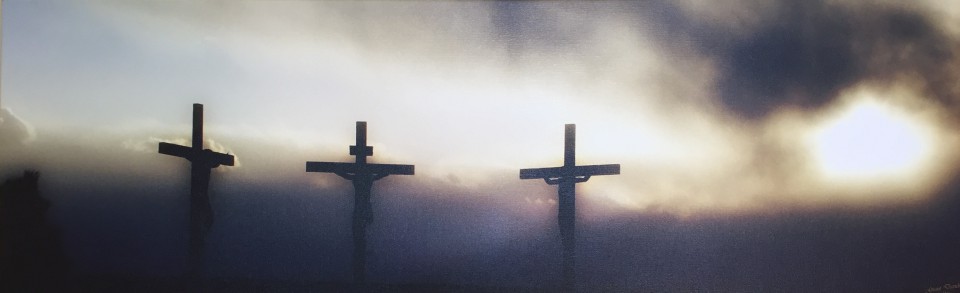
The journey to the cross is long but Sunday is coming!!! Hallelujah!
“In your relationships with one another, have the same mindset as Christ Jesus:
Who, being in very nature God, did not consider equality with God something to be used to his own advantage; rather, he made himself nothing by taking the very nature of a servant, being made in human likeness. And being found in appearance as a man, he humbled himself by becoming obedient to death—even death on a cross! Therefore God exalted him to the highest place and gave him the name that is above every name, that at the name of Jesus every knee should bow, in heaven and on earth and under the earth, and every tongue acknowledge that Jesus Christ is Lord, to the glory of God the Father.” — Philippians 2:5-11
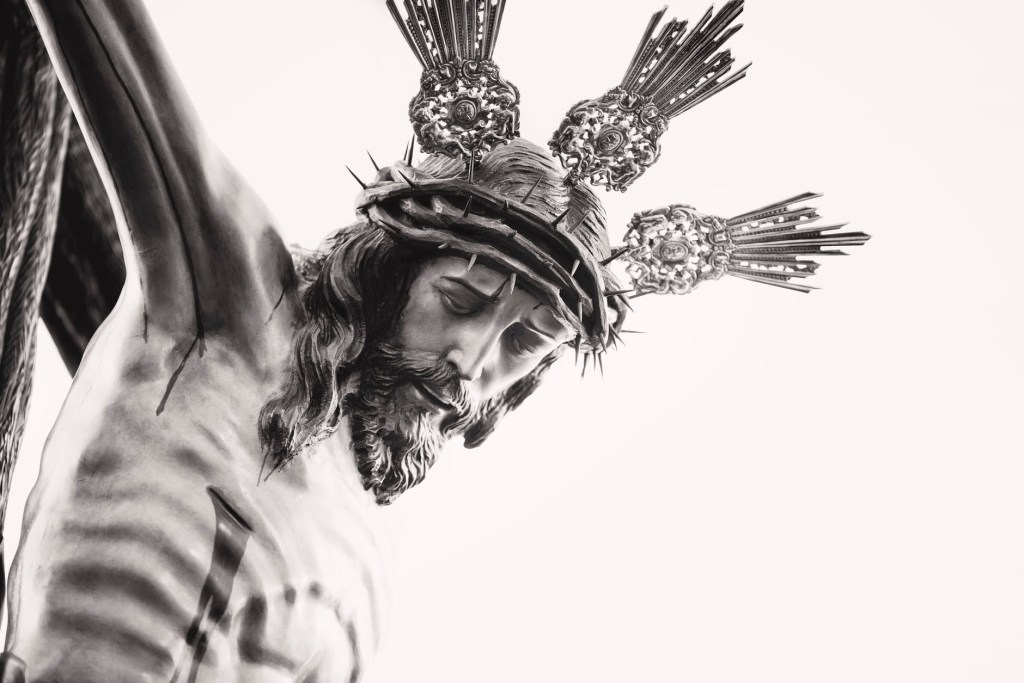
Philippians 2 says this of Jesus Christ: “He made himself nothing, taking the form of a servant, being born in the likeness of men. And being found in human form, he humbled himself by becoming obedient to the point of death”. While his death was a clear sacrifice, the fact is that Jesus’ entire life was marked by sacrifice—giving up his rights as a King for the sake of others.
From the moment he was born, his feet were always walking toward the ultimate sacrifice of that brutal Roman cross. Have you ever wondered why sacrifice is so central to God’s plan of redemption and reconciliation? Why couldn’t God just forgive people of their sins without sacrifice?
If you think about what it means to bring about reconciliation in a human relationship, you can see how sacrifice is always part of the process.it forces a personal cost. If you get angry at someone over some issue, to reconcile means work. It will cost you something to forgive because you have to absorb the pain of the offense. You will have to sacrifice your right to be angry and move toward forgiveness. Actually, both parties have to pay a price. The bottom line is that without sacrifice there is no reconciliation. There is only hardness of heart and death of relationship.
In a very similar way, we must sacrifice in order to move toward God with confession and repentance. We must come to the end of ourselves, killing any sense of pride and self-righteousness. But we are not the ones who move first. It is not our sacrifice that saves us. God’s plan of redemption is primarily about his sacrifice, not ours. I read once that redemption is a term of value, so there must be a cost involved. To redeem means to buy back, to regain possession of something in exchange for payment. Because we are created in the image of God and he loves us, he considered us worth the cost of redemption. However, the full cost of redeeming a human being is staggering. What does it cost to buy a person back from the realm of sin and death, from the reign of Satan? The cost is commensurate with the destruction that sin, death, and Satan have brought to humanity. The cost is beyond our ability to pay. No amount of sacrifice on our part would enable us to cover the cost. Thankfully, the full cost fell on Jesus. All of the curses of the Fall, most notably our sin and the resulting death, were placed on Christ. His sacrifice makes our reconciliation with God possible. Thanks be to God!
If you are still hanging on to the sins in your life, my friend, it’s time to allow God into your life. Nothing in this world is worth the eternal salvation Jesus Christ offers us!
And as he was setting out on his journey, a man ran up and knelt before him and asked him, “Good Teacher, what must I do to inherit eternal life?” And Jesus said to him, “Why do you call me good? No one is good except God alone. You know the commandments: ‘Do not murder, Do not commit adultery, Do not steal, Do not bear false witness, Do not defraud, Honor your father and mother.’” And he said to him, “Teacher, all these I have kept from my youth.” And Jesus, looking at him, loved him, and said to him, “You lack one thing: go, sell all that you have and give to the poor, and you will have treasure in heaven; and come, follow me.” Disheartened by the saying, he went away sorrowful, for he had great possessions. And Jesus looked around and said to his disciples, “How difficult it will be for those who have wealth to enter the kingdom of God!” And the disciples were amazed at his words. But Jesus said to them again, “Children, how difficult it is to enter the kingdom of God! It is easier for a camel to go through the eye of a needle than for a rich person to enter the kingdom of God.” And they were exceedingly astonished, and said to him, “Then who can be saved?” Jesus looked at them and said, “With man it is impossible, but not with God. For all things are possible with God.” Peter began to say to him, “See, we have left everything and followed you.” Jesus said, “Truly, I say to you, there is no one who has left house or brothers or sisters or mother or father or children or lands, for my sake and for the gospel, who will not receive a hundredfold now in this time, houses and brothers and sisters and mothers and children and lands, with persecutions, and in the age to come eternal life. But many who are first will be last, and the last first.” — Mark 10:17-31
We are now over halfway through Lent. Throughout the journey so far, a lot has been said about sin and repentance. It’s not a fun, lightweight topic. No one likes to think about sin unless it’s someone else’s. But we’ve been called to repent as a way to take ownership of our sinfulness. It’s not a suggestion. Rather, it’s a directive from God.
Martin Luther said the Christian life is a walk of repentance and faith. But why? Why is it so important?
Repentance is a response to God’s grace. It leads to joy and restoration. Not frustration from trying harder, and not despair from beating yourself up. Those are forms of penance. Jesus is the end of the law for righteousness to everyone who believes (Romans 10:4). He condemned sin in the flesh in order that the righteous requirements of the law might be fulfilled in us, who walk not according to the flesh but according to the Spirit. There is therefore now no condemnation for those who are in Christ Jesus (Romans 8:1-4). Repentance is motivated by love for God and a desire for fellowship with him.
King David said, “Have mercy on me, O God, according to your steadfast love; according to your abundant mercy blot out my transgressions. Wash me thoroughly from my iniquity, and cleanse me from my sin! For I know my transgressions, and my sin is ever before me” (Psalm 51:1-3). David was not a man without sin. He, like each of us, succumbed to the world. Only when he came clean with God did he experience the grace of God: “I acknowledged my sin to you, and I did not cover my iniquity; I said, ‘I will confess my transgressions to the LORD,’ and you forgave the iniquity of my sin.” (32:5).
Repentance is taking responsibility for our sin. The problem is not just the sin, but that each of us is sinful. It would not be enough to clean the outside of the cup, which is why we must seek a deeper cleansing: “Behold, you delight in truth in the inward being … Purge me with hyssop, and I shall be clean; wash me, and I shall be whiter than snow … Create in me a clean heart, O God, and renew a right spirit within me.” (Psalm51:6-7, 10).
Repentance is turning to God in faith. In everyday language, repentance means to “change your mind,” to reconsider how you are living your life in light of your new identity in Christ. Left to our own accord, we are prone to pursue life on our terms, and to locate our sense of worth and joy in places apart from God. So the call to repentance is a standing invitation to give up our idolatrous pursuits, and turn to the one true God who restores us to the life for which we were made. We cannot save ourselves. Repentance is initial and ongoing. That’s why you must be in humility and seek God’s grace.
If you are in a place where the old you is ready to be cleansed, it’s time to repent of your sins, and say yes to God.
Moses went to the mountain of the Lord in the Sinai wilderness and stayed there for 40 days and nights in prayer and fasting (Exodus 24:18). Elijah, after he was fed with bread from heaven, journeyed through the wilderness without any food for 40 days to the mountain of God (1 Kings 19:8). Jesus was without any food in the wilderness for 40 days to prepare himself for the mission that the Father had sent him to accomplish.
Forty days shows up a lot in scripture. And often, it involved suffering. The forty days of Lent parallels the forty days that Jesus went without food in the wilderness. It is one of the ways we identify with his suffering through the practice of self- denial. Whether it’s food or TV or “me-time,” we deny ourselves particular comforts and pleasures as a way of remembering what Jesus endured for us. The point is not to manufacture suffering, as if we could earn some kind of righteousness through self-denial. The point is to rid our daily lives of anything that takes more precedence than our Savior.
“Jesus, full of the Holy Spirit, returned from the Jordan and was led by the Spirit in the wilderness for forty days, being tempted by the devil. And he ate nothing during those days. And when they were ended, he was hungry” (Luke 4:1-2).
The striking thing in this story is that Jesus went into the desert under the direction of the Holy Spirit. He chose this suffering. Indeed, his whole life was a choice to enter into our suffering. Why? Because God loves us so much! The testimony of Scripture is that Christians need to embrace suffering as part of our calling and endure it as part of our witness: » “Beloved, do not be surprised at the fiery trial when it comes upon you to test you, as though something strange were happening to you” (1 Peter 4:12). » “For it has been granted to you that for the sake of Christ you should not only believe in him but also suffer for his sake” (Philippians 1:29). » “Indeed, all who desire to live a godly life in Christ Jesus will be persecuted” (2 Timothy 3:12).
Our wilderness is not literal, but it is very real. We are tempted – perhaps even determined – to sustain ourselves, to escape our vulnerability, and to chase our aspirations without thought of others.
But Jesus offers us another way. Despite the suffering he reveals to us what it means to embrace our humanity without short cuts. A minister wrote a book called What’s the Least I Can Believe and Still Be A Christian. It’s a portrayal of the very thing Jesus taught us not to do. Don’t give just a little to God in order to check a box. Give your entire life. All of it! There are no shortcuts because Jesus took no shortcuts. “The devil said to him, ‘If you are the Son of God, command this stone to become bread’” (Luke 4:3). Certainly Jesus could have done this, but the lack of bread revealed a deeper hunger for God, and a deeper satisfaction of being sustained by God.
“And the devil took him up and showed him all the kingdoms of the world in a moment of time, and said to him … worship me, it will all be yours’” (4:5-7). It would all be his eventually, but to have it now would be to have it without suffering and death. How often do we worship whatever promises to give us what we want now, without inconvenience or discomfort? But Jesus worships God alone, not because it is easier, but because it is truer and far better.
“And [the devil] took him to Jerusalem and set him on the pinnacle of the temple and said to him, ‘If you are the Son of God, throw yourself down from here, for it is written, ‘He will command his angels concerning you, to guard you’” (4:9-10). Had Jesus done this, he could have ended all this temptation and trial. How often do we call upon God for miraculous solutions to our suffering, not because we trust him in our circumstance but because we want out of it? But Jesus would not put God to the test.
We live into our identity by surrendering to the Holy Spirit, wherever he may lead us. This season is about waiting, maybe even suffering the loss of things that have come to define us, because we know that our life is dust, and because we are looking forward to resurrection life.
Also He said to them, “Is a lamp brought to be put under a basket or under a bed? Is it not to be set on a lampstand?For there is nothing hidden which will not be revealed, nor has anything been kept secret but that it should come to light.If anyone has ears to hear, let him hear.” — Mark 4:21-23
Do you ever look at social media posts and think, “They have best life”? It’s easy to compare our insides to other people’s outsides. Unfortunately, the outside doesn’t always show the real truth. When we bring our lives into the light, they aren’t as pretty as we thought they were. But that is the authentic truth we need to own. It truly is our friend because it points us to God, who “is faithful and just to forgive us our sins and to cleanse us from all unrighteousness” (1 John 1:9).
The primary means by which we walk in the light with God is the simple act of confession. And let’s be honest, confession is not something we race to do. Confession does not secure forgiveness, but rather facilitates the power of forgiveness and its cleansing effects in the life of the believer. The acting agent is the blood of Jesus, his sacrificial death on the cross (1:7). Jesus is willing and able to cleanse us and restore our relationships if we will just get the real us into the light.
To walk in darkness means to neglect or even deny the truth about God, or about ourselves. A toddler may close his eyes and believe that he cannot be seen, but only because he does not see. So it is with the one who walks in darkness. He thinks his way of seeing things is in fact reality, but nothing could be further from the truth. He will not be able to have fellowship with God or with others until he sees according to truth only found in the word of God. In the realm of truth, he will be able to relate to God and others on the basis of what is real, and experience the cleansing power of Jesus’ blood.
That sounds great, but when it comes to our actual lives, we are not always so eager to be authentic. Instead, we deal with reality in other ways. We distract ourselves with the artificial lights of work, entertainment, and hobbies. We let the world tickle our ears with distorted scripture. When ordinary busyness doesn’t work, we take it up a notch and give ourselves to something so completely that it consumes us. These are our addictions. Pretense, excuses, busyness, addiction, and despair are not our friends. They turn us in upon ourselves, which leads to death. An honest look at reality, with God’s help, gives us insight into the way sin works and how God can bring healing and transformation to those areas of our lives. We can only repent of what we are able to see.
Search us, O God! Every dark corner and every hidden place. During this journey to the cross, are you ready to confess your sins, the sins that Jesus died for?
Then the Lord appeared to Solomon at night and said to him: “I have heard your prayer and have chosen this place for Myself as a temple of sacrifice. If I close the sky so there is no rain, or if I command the grasshopper to consume the land, or if I send pestilence on My people, and My people who are called by My name humble themselves, pray and seek My face, and turn from their evil ways, then I will hear from heaven, forgive their sin, and heal their land. My eyes will now be open and My ears attentive to prayer from this place. And I have now chosen and consecrated this temple so that My name may be there forever; My eyes and My heart will be there at all times.” — 2 Chronicles 7:12-16
As we continue on this journey to the cross, repentance is becoming more and more important in your relationship with God. At least it should be. Why? Repentance begins with seeking God, embracing the way things really are by confessing them, and then turning from the sins which invade our lives.
The word “sin” has been defined and applied in so many ways that I think most people have adopted a rather trite view of sin that is focused on specific actions that break God’s rules. The biblical concept of sin is not less than that, but it is much more. 19th century philosopher Soren Kierkegaard said, “Sin is the despairing refusal to find your deepest identity in your relationship and service to God. Sin is seeking to become oneself, to get an identity, apart from God.” In other words, sin separates you from God. There’s no way around it. You cannot be in union with God and in your sin.
We were made for God, to center our entire life on him and find our sense of worth and purpose in him. Anything other than that is sin. And truthfully, how often do we place our desires above God’s plan for us? We end up losing our identity as a child of God, hanging our hat on our self-centered identity formed in our own image. Everyone is building his or her identity on something. It’s human nature.
St. Augustine said, “We were made for God, and that our hearts are restless until they find rest in him.”
This is how Israel got to where they were. They made other things ultimate and gave themselves to false gods. Israel was always running to other gods and then coming back to the Lord. This is the nature of our sin. We give ourselves out to false gods and then come running back to the one true God when our life is in ruins.
The gospel sets us free from this kind of false faith. God approves of us in Christ, without condition. We are accepted and adopted into his family. We don’t need anything more than what we have been given in Christ. We cannot accomplish anything more than what he has already done on our behalf. Nothing can separate us from the love of God when we repent and say yes to Jesus Christ.
We not only need to admit that we have sinned, but also that we have sinned because we were tempted by our own desires, and willfully gave ourselves to them. This kind of ownership is necessary for true repentance, and stands in contrast to many of the ways we typically try to deal with our sin. Yes, Jesus Christ put on every single sin we have or will commit. But we do have a responsibility to own it, repent for it, and humbly ask for forgiveness. But we try to justify our sin. When you become aware of sin, do you feel the need to nuance everything, explain how complicated things are, or make excuses? Taking responsibility for sin means we say, “I lusted because my desires are perverted” … “I lied because I am afraid of what people think about me” … “I ate that because I do not have self-control around food.”
We try to downplay our sin, hoping or assuming that God overlooks our sin. Or even worse, we seek to just change the word of God to fit our sinful narrative. We don’t think sin really affects our ability to relate to God, or hinders the flow of his blessing. We think we are the exception. Taking responsibility for sin means we say, “My sin is destructive and grieves God. I will not be right with him until I deal with this.”
We pretend things are better than they really are, cleaning the outside of the cup while we are filthy on the inside. Taking responsibility means we say, “It doesn’t matter how good people think I am. God sees right through me, and is not impressed or tricked by my lip service. God hates hypocrisy!”
Our problems are bigger than our circumstances: we are broken on the inside. And repentance is deeper than what we do: we need to repent of who we are. Remember, repentance is good news. It is hope that God will restore us. Conviction of sin is a difficult pill to swallow, but it is good medicine to the soul.
And they came to Jericho. And as he was leaving Jericho with his disciples and a great crowd, Bartimaeus, a blind beggar, the son of Timaeus, was sitting by the roadside. And when he heard that it was Jesus of Nazareth, he began to cry out and say, “Jesus, Son of David, have mercy on me!” And many rebuked him, telling him to be silent. But he cried out all the more, “Son of David, have mercy on me!” And Jesus stopped and said, “Call him.” And they called the blind man, saying to him, “Take heart. Get up; he is calling you.” And throwing off his cloak, he sprang up and came to Jesus. And Jesus said to him, “What do you want me to do for you?” And the blind man said to him, “Rabbi, let me recover my sight.” And Jesus said to him, “Go your way; your faith has made you well.” And immediately he recovered his sight and followed him on the way. — Mark 10:46-52
Pride is the great enemy of humility. And yet pride is encouraged, nurtured, and even celebrated in our culture today. Bob Thune observes: “The brashest expressions of pride are easy to spot: the athlete who boasts about her talent, the arrogant entrepreneur who flaunts his achievements, or the well-connected neighbor who name-drops in every conversation. Most of us are smart enough to avoid appearing prideful in these obvious ways. But that’s just the problem. We can avoid looking prideful without actually killing our pride.”
What is pride? It’s not something to put on a flag or dedicate a month to. The Bible gives us the information we need. Pride often manifests itself as arrogance: the Apostle John refers to this as “the pride of life” (1 John 2:16). Pride can also manifest itself as self-centeredness, looking out for your own personal interests (Philippians 2:4). In other words: the essence of pride is self. Regardless if it’s arrogance and boasting or as self-protection and fear of people, it’s pride.
In our life as a Christian we are asked to put on humility while putting our pride to death. How? Simple. Look to Jesus.
Jesus is our model, because though he had every reason to be prideful (he was perfect), he chose instead the path of humility. Scripture commands us to follow his example: “Have this mind among yourselves, which is yours in Christ Jesus, who, though he was in the form of God, did not count equality with God a thing to be grasped, but emptied himself, by taking the form of a servant, being born in the likeness of men” (Philippians 2:5-7).
Here’s the thing. Jesus doesn’t want us to mimicking him. If we do that, we miss the gospel. The heart of the good news is that we can be more like Jesus only if, and because, we are united with him. We are united with Christ by grace through faith in his life, death, and resurrection. Because we have rebelled against God, we deserve to be crushed by his divine wrath. Jesus “humbled himself to the point of death, even death on a cross” (Philippians 2:8)—taking our shame and guilt upon himself, and enduring the wrath of God against our sin, so that those who humbly come to him can be forgiven and reconciled to God. This is the Good News of Easter! This is why we have to be in the wilderness. We can’t put down the pride without wrestling with satan first.
Are you ready to be free from your pride? Do you truly want to know Jesus Christ? It’s time to stop running and start repenting. It’s freeing, my dear friends. So the next time you think pride is worth celebrating, ask God what He thinks? I’m pretty sure He wouldn’t hold a parade.
As they went out, they came upon a man of Cyre’ne, Simon by name; this man they compelled to carry his cross. — Matthew 27:32
I have always been drawn to Lent. I can’t really articulate why except that Lent encourages some significant self reflection. Too often, if done right, these reflections can lead to change and sacrifice.
Lent is filled with sacrifice. The point, of course, is to reflect on Christ’s sacrifice, to feel just a little bit of the pain he felt, and to draw closer to God as we let go of the worldly comforts. This isn’t easy. Sacrifice often includes pain of some type. Sacrifice requires thinking beyond yourself and your wants. Sacrifice demands discipline. Sacrifice isn’t fun.
And yet, I love Lent. I love the deep study and reflection of the season. Deep down, far below my selfish nature, exists a desire to remove the suffocating materialism and shallowness that so often characterizes modern life. I am so tired of cheap grace found in so many Christian circles.
When we traverse the wilderness of Lent, we suffer but it’s through the suffering of sacrifice that we draw closer to The Christ, authentically and humbled.
What a merciful God; he does not ask us to journey alone. As the psalmist said, “Yea, though I walk through the valley of the shadow of death, I will fear no evil: for thou art with me…” God has been with us and continues to be with us in all times. Lent may be full of sacrifice but it’s also full of mercy and grace!
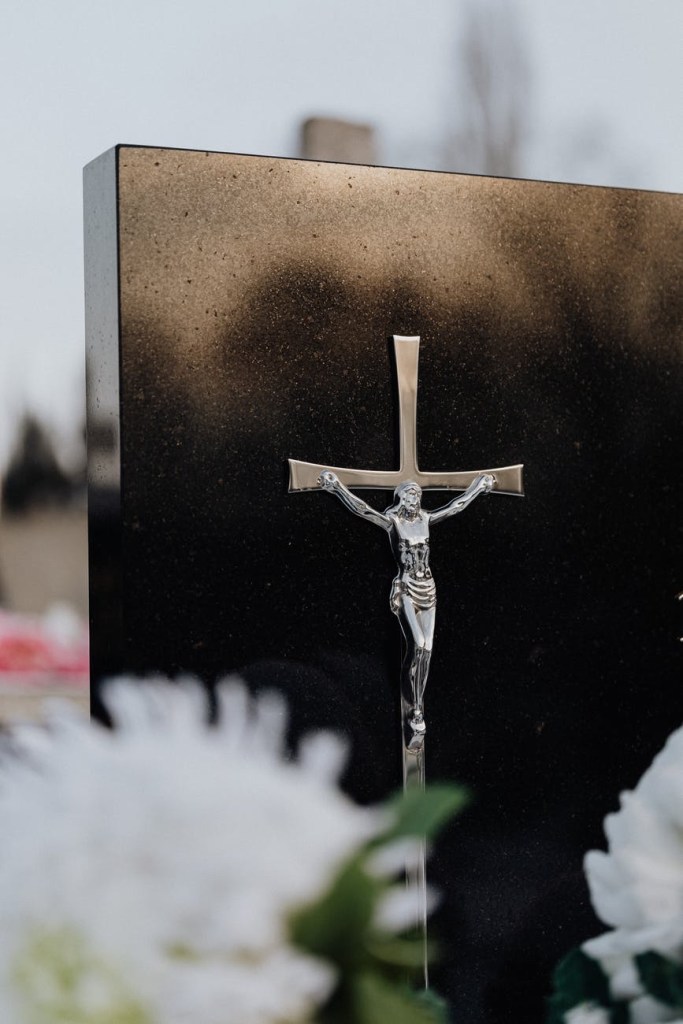
Easter is coming but don’t rush it. Don’t jump ahead to celebration without understanding the sacrifice. Jesus has indeed paid your debt but he has asked you to pick up your cross. We often forget that detail of the story. Lord, in your mercy, forgive us.
Will you join me? Or more importantly will you join Christ, picking up your cross, and following Him?






 Lord, have mercy…