• Home
  • About
  • First Step Counseling

Lord, have mercy…

~ My life. My story.

Lord, have mercy…

Category Archives: mental health

Food. Necessary Evil?

10 Thursday Sep 2020

Posted by Janean Tinsley in mental health, My Story. My Faith.

≈ 8 Comments

Tags

God, Jesus Christ, ugly, weight

For weeks I have put off writing this blog. I get started then erase it and walk away. But here I sit once again so …

I am overweight.
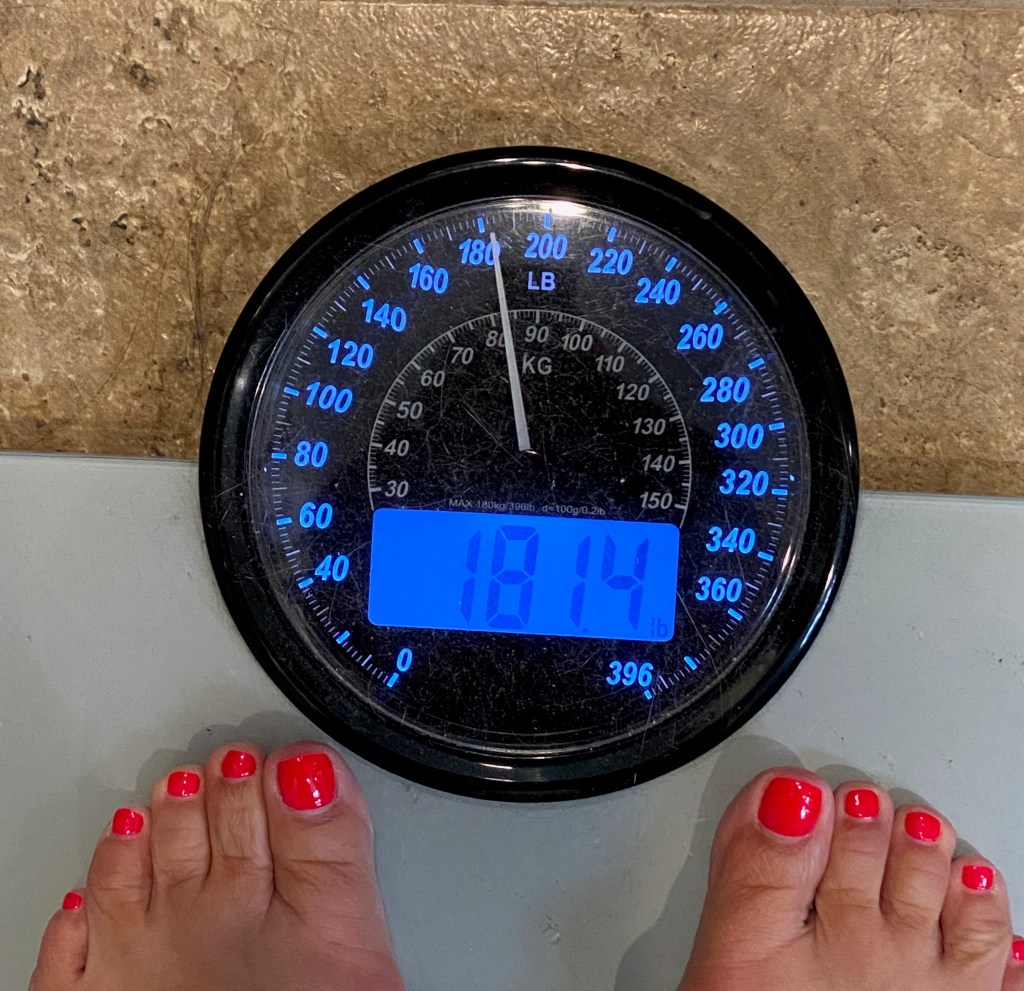
There. I said it. Actually, I never made it to that statement before when I tried to write this one so there’s a step forward! Seriously, I am overweight. And it’s become something that I can no longer ignore or convince myself that it’s not really that bad. It IS really that bad and it’s time I acknowledge it so I can make some significant changes in my life.

As with 99% of you, 2020 has not been kind. In fact, 2020 has become my favorite four-letter word — “What the 2020?” is my personal favorite. Some of you may have seen the jumanji memes about this year on social media. We laugh about those but seriously, each month seems to bring some new level of awful to navigate. Add to that my own personal tribulations and it’s been a year made for horror movies or, at least, psychological thrillers.

Beginning about mid-year 2019, I found myself slipping into a deep state of depression which only increased my anxiety. Before you ask, yes, I am a therapist. I’m a trauma specialist, actually. So I know what extreme stress and anxiety can do to the body. Yes, I know all of the tools I should use. No, I do not take my own advice very often, thank you very much.

As 2019 wound down, I saw myself going deeper into a void that I filled with food. The more numb I became, the more I used food to feel…anything. Little did I know that by ignoring the depression when it began, I was setting myself up for a spiral unlike anything I had experienced before.

I’m not going to get into everything that has happened this year in my personal life. Suffice it to say, it’s been a year of pain, betrayal, and loneliness. I’m so very grateful for a husband who has stood by me through it all, even carrying some of the pain himself. Regardless of the cause, the result was a deep depression that became quite suffocating. I pushed away friends, family, and, most importantly, God. Instead of pouring it all out to Him, I allowed the crevasse in my soul to grow wider and deeper with each passing day, filling it with the only thing that seemed to bring me any comfort. Food. It’s not like I was drinking or getting high so it can’t be that bad, right? [Insert shoulder shrug here]

Food has been for me a love/hate thing most of my life. I have watched women struggle with the pleasure of eating versus the expectation of a certain weight. I know what it is like to pick at your food around friends only to sneak unhealthy snacks when no one is looking (judging). I have battled the pleasure of eating with the guilt of eating and I have lived with an eating disorder after my “friends” made fun of my appearance one too many times. I can honestly say I have never looked in the mirror and said, “I’m pretty” or “I really love the way I look.” Most of my thoughts about myself are not really G-rated so I’m not going to put them out here on social media. Can you relate?

The love/hate of food has only escalated this year. I noticed early 2020 that I was consuming more sugary beverages than I used to but I didn’t make any changes. Then after an abrupt change in my life which resulted in threats, harmful letters, and humiliation, I found a sense of loneliness that pushed me beyond anything I had felt in my life. Add to that the mandatory isolation because of Covid-19 and the result was an eating binge that would last seven months and a weight gain of more than 20 pounds.

Now, let’s get to the truth of things. No one is at fault except me. I don’t blame my circumstances, my losses, or my depression on my weight gain. The only blame to be placed is me. I made a choice – replace God with instant pleasure. I wanted to fill a void that was so painful, so empty. And I wanted it filled immediately with something I could “control.” Food became that source of fulfillment. Unfortunately, as we all know, anything outside of God is only temporary and will always lead to emptiness. This situation is no different.

Recently, I had an invitation to go out with some folks. I turned it down. Why? I didn’t want anyone to see me. I am embarrassed of myself and the way I look. This summer, my husband and I joined a boat club. I have always loved the water and it’s one of very few places that bring me complete contentment. I have only invited a couple of people on the boat with us, not because I don’t want people to go. No no. It’s because I am too embarrassed for people to see me. I worry constantly about running into people I haven’t seen in a while when I go out because my fear is the judgement or pity in their eyes when they look my way. The anxiety I feel becomes the thing from my childhood all over again. It’s debilitating and I have to pretend to be okay all of the time.

I read a book several years ago called, God Loves Ugly by Christa Black. There was a statement the author wrote that has always stuck with me. “Your body is a house, and that house provides a means of carrying around the most precious cargo in the universe: you.” Well, my house has been really messy for about a year now and it’s time I cleaned it up.

1 Corinthians 6 is quite implicit about this.

13 You know the old saying, “First you eat to live, and then you live to eat”? Well, it may be true that the body is only a temporary thing, but that’s no excuse for stuffing your body with food, or indulging it with sex. Since the Master honors you with a body, honor him with your body!

14-15 God honored the Master’s body by raising it from the grave. He’ll treat yours with the same resurrection power. Until that time, remember that your bodies are created with the same dignity as the Master’s body. You wouldn’t take the Master’s body off to a whorehouse, would you? I should hope not.

19-20 Or, didn’t you realize that your body is a sacred place, the place of the Holy Spirit? Don’t you see that you can’t live however you please, squandering what God paid such a high price for? The physical part of you is not some piece of property belonging to the spiritual part of you. God owns the whole works. So let people see God in and through your body.

I cannot begin to tell you how these words seep into my soul and cause me unrest. I have not honored God because I have not honored my body. I have given God my soul but kept my physical body to myself, mistreating it, criticizing it, and neglecting it. And that is a sin. A sin that I have allowed to grow and fester.

I truly do not want to have anything separate me from God. I cannot live into the redeemed identity Christ gave me if I am living with one foot in and one foot out of a Christ-given life. Unfortunately, I do not think I can change on my own. In fact, I know I can’t.

Ecclesiastes 4:

9 Two are better than one, because they have a good reward for their toil. 10 For if they fall, one will lift up his fellow. But woe to him who is alone when he falls and has not another to lift him up! 11 Again, if two lie together, they keep warm, but how can one keep warm alone? 12 And though a man might prevail against one who is alone, two will withstand him—a threefold cord is not quickly broken.

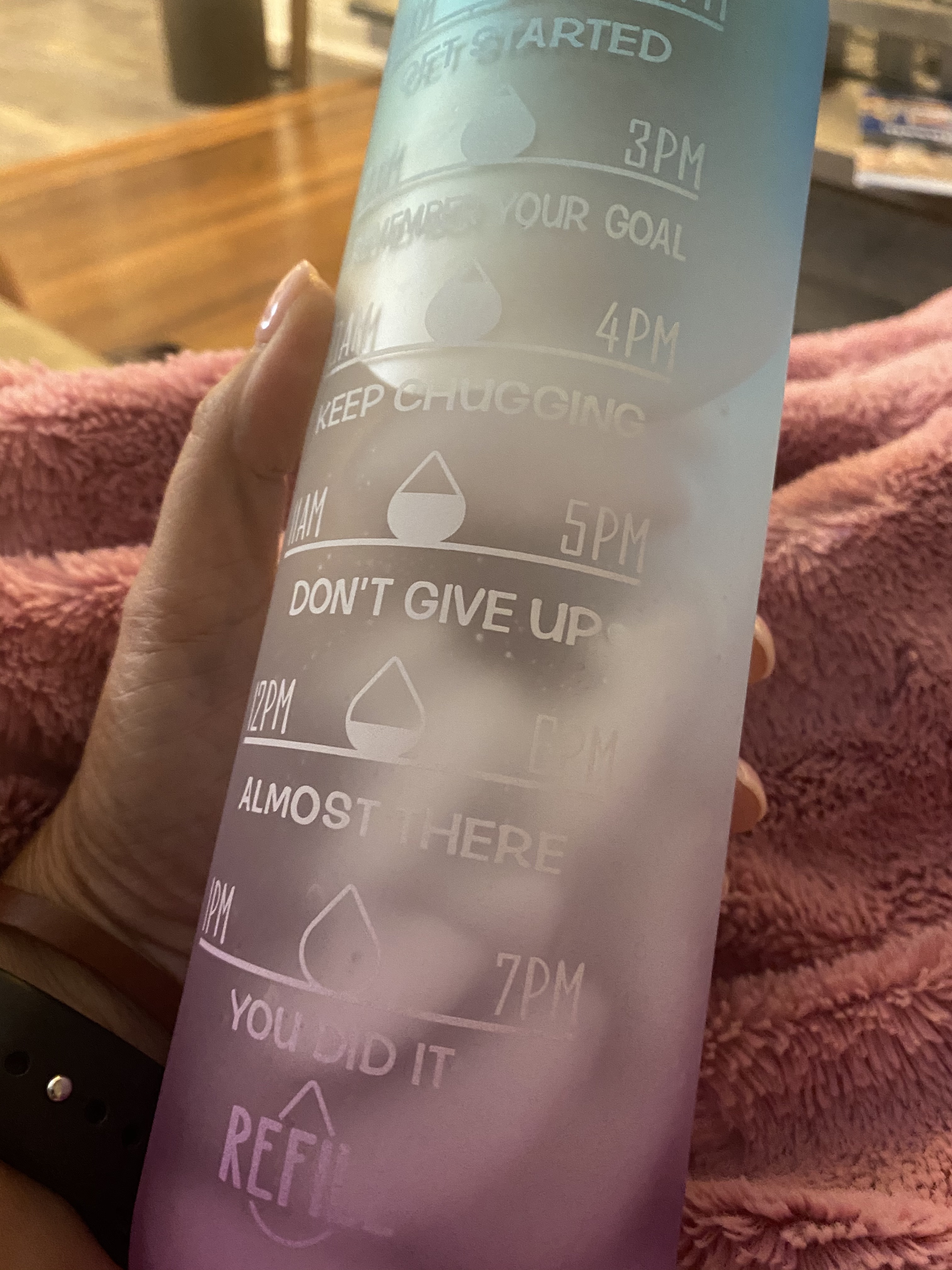
I have a dear friend who has already been part of my cord. She encourages without judging. She shakes her finger without condemning. And she helps me laugh when I want to cry. I mentioned that I needed to drink more water. Without another word, she bought me this water bottle. But it’s not just any bottle. It’s a constant cheerleader, reminding me to not give up. It’s a little thing but actually quite huge. And it’s a step for me.
I know that to be accountable, I have to be completely honest. So that is the reason behind this post. I am about to do the one thing I never believed I could ever do…

I weigh 181.4 pounds. I have a BMI of 32. I am considered obese. I think I’m ugly.

But God thinks I am beautiful. So beautiful, in fact, that he died for me! “Therefore, if anyone is in Christ, he is a new creation. The old has passed away; behold, the new has come.” (2 Cor 5:17)

Praise be to God!

I proclaim in the name of Jesus Christ that I am ready to make a change. I am no longer going to use food as substitute for the Holy Spirit. I am no longer going to use food a source of comfort for difficult periods in my life. I am going to use food for fuel, thankful to God for sustaining me each day. I am going to learn to love myself so that I can fully love others and receive the love others have to give me. I am ready. If you are ready to make a change in your life, give something sinful up, surrender to God, and embrace the new life that has come, join me. It’s a journey meant to be traveled together!

Share this:

  • Click to share on X (Opens in new window) X
  • Click to share on WhatsApp (Opens in new window) WhatsApp
  • More
  • Click to share on Facebook (Opens in new window) Facebook
  • Click to print (Opens in new window) Print
  • Click to email a link to a friend (Opens in new window) Email
  • Click to share on LinkedIn (Opens in new window) LinkedIn
  • Click to share on Reddit (Opens in new window) Reddit
  • Click to share on Pinterest (Opens in new window) Pinterest
  • Click to share on X (Opens in new window) X
Like Loading...

The Beauty of Darkness

31 Sunday May 2020

Posted by Janean Tinsley in mental health

≈ Leave a comment

Tags

depression, Jesus Christ, mental health, Suicide

Depression and the power it holds

May is mental health awareness month. It really couldn’t have fallen on a more perfect time in 2020. As the pandemic continues, and people are growing more and more weary of staying home, the importance of mental health care takes a front row seat. I know for me, personally, the pandemic has definitely exacerbated feelings of hopelessness and isolation. But more on me later.

Mental health has consistently had a bad wrap in society and has throughout history. The stigma associated with such illnesses as depression and anxiety has had far-reaching consequences in our history. In Biblical times depression was viewed as a spiritual rather than a physical condition. Like other mental illnesses, it was believed to be caused by demonic possession. As such, it was dealt with by priests rather than physicians, according to an article in the Journal of the Royal Society of Medicine. As time went on, treatment would vary from exorcisms to physical beatings. In many cases, those suffering from depression or anxiety (and other mental illnesses) were either locked away, branded as demon possessed, given lobotomies, or even put to death.

Although we have come a long way from those barbaric treatments and beliefs, those suffering from depression and anxiety still find themselves shunned, ignored, and alone. Why? Because often they do not know what is wrong in order to seek help. For that reason, they exhibit signs of irritability, isolation, sadness, and anger. Quite frankly, it’s difficult to be around someone who acts as though they don’t want you around. It’s a catch-22 for the sufferer. It’s a “leave me alone but please don’t go” tug-of-war in their minds.

What is depression? It is defined​ as a mood disorder that causes a persistent feeling of depressed mood or sadness and the often profound loss of interest in things that usually bring you pleasure. It affects how you feel, think, and behave and can interfere with your ability to function and carry on with daily life.

Most people will experience some time of depression in their lifetime. In fact, there are seven different types of depression.

  1. Major Depressive Disorder or Clinical Depression.
  2. Persistent Depressive Disorder.
  3. Bipolar Disorder.
  4. Postpartum Depression.
  5. Premenstrual Dysphoric Disorder.
  6. Seasonal Affective Disorder.
  7. Atypical Depression.

During this pandemic, I have found that many of my clients are exhibiting some form of depression. For some, this is the first time they have experienced a prolonged onset of these symptoms. It can be frightening if you are unaware what is happening and why. That is why it is so incredibly important to be honest about your thoughts and feelings to those around you. Often it’s those closest to you who can see the pain you are in even when you can’t.

I have suffered from depression and anxiety for most of my life. In fact, you can read about my anxiety in an earlier blog. Today, however, I would like to focus on depression and my personal experience. Before I begin to share my story, I need to state upfront that there are some things which might be a trigger for some people. If you are feeling hopeless and are having thoughts of harming yourself or someone else, please call the the National Suicide Prevention Lifeline at 1-800-273-8255 for support and assistance from a trained counselor.

As a little girl I can remember having moments of deep sadness. As I think about those times, I am unable to really pinpoint anything specific that would have caused such sadness. I would desperately want to be included with other children but also would shy away from the very ones I wanted to be with.

I would lay in my bed at night, convinced that I was going to die. I would do everything in my power to stay awake because I was certain that once I drifted off to sleep, I would never wake up. On one particular night, I became so distraught at the thought of dying, I woke my parents up in a complete emotional state. I can vividly remember trying to explain the hopelessness I had but unable to do so.

Throughout my childhood and teenage years, I would often find places to disappear to so I could cry. I didn’t want anyone to know just how much I was struggling. In my middle school years, suicide became a real alluring thought because I was so deeply surrounded in darkness. Thankfully, my parents recognized the sadness as something that was growing more and more out of control so they stepped in and took me to a counselor.

High school was no walk in the park. My depression increased into uncontrolled anxiety. I spent a crazy amount of time trying to be someone other than myself, hoping beyond hope that one of the personas I put on would give me a release from the prison I was constantly in.

The sadness, low self-esteem, hopelessness, and exhaustion became close friends through the years. I learned to accept them as just part of my thinking and actually found some kind of sick comfort in their presence. I found relief through the tears and the pain in my soul seemed to invite me into a place I didn’t understand but didn’t push away, either. This would continue through my young adult life.

Fast forward a few years. I met my husband. We married and had a child. We had a good life. And yet, behind the perfectly decorated front door, I was a mess. I would fly off the handle for no reason then sink into a deep grief over my words. I wasn’t sleeping and my headaches were increasing. On one particular after, my husband and I were in the car and I was saying something that was biting in nature and he turned to me saying, “You need medication.” I was so hurt. But more than hurt, I knew he was right.

It would take a few more months before I finally listened and had a visit with my doctor. He was so kind and there was absolutely no judgment when I told him my needs. Why had I waited so long to get help?! After that, I spent a few years feeling relatively at peace. I would have the occasional sinking spell but nothing like I had been experiencing. Unfortunately, the bottom dropped out and all of that changed.

My husband and I went through a three year stretch where we were anything but at peace. Job loss, moving, financial woes, illness… it was tough. And because of the difficulties we were experiencing, I decided to try to save money where I could. We didn’t have medical insurance so I stopped my antidepressant to save money.

If this is your first time reading my blog you won’t know this about me but I am a Christian. I have always known the Lord but I didn’t have a personal relationship with Jesus Christ until my early 30s. It was also during that time that I accepted my call to ordained ministry. This is important information because a lot of people still believe that depression is only a spiritual problem or they believe it’s only a chemical problem. I, however, believe it is both.

I absolutely believe in evil in the world and I believe that the battle of good and evil is constant. Ephesians 6:12 says, “For we are not fighting against flesh-and-blood enemies, but against evil rulers and authorities of the unseen world, against mighty powers in this dark world, and against evil spirits in the heavenly places.” Depression is a mighty power that dangles darkness like a golden carrot. And it’s nothing to ignore.

I really can’t properly describe the roller coaster I have ridden over the past few years. I absolutely loved life and hated life all at the same time. While privately continuing to battle these unseen evil forces, I put on a completely different face publicly.

As a pastor and a therapist, my entire existence was about helping other people. And I’m actually really good at it. I can empathize with people suffering with pain, loneliness, fear, sadness, etc. because I’ve been there. I’ve walked in similar shoes. So I have given my all to helping those who need help and I’m proud to have been chosen by God to do that for His glory. But just like the rest of my life, I pushed down my own needs and concerns, sidelining them in lieu of focusing on others. And for over a decade, I did that without a second’s thought. But like a balloon, if you keep filling it with air, it will eventually pop.

I “popped” on March 18, 2020. I knew things were getting to a crisis point within my psyche several weeks prior but I had become so good at covering up my pain I arrogantly believed I could continue in my tailspin without consequence. I had taken a leave of absence from the ministry and was working toward expanding my counseling practice to a full-time status. I had just celebrating the opening of my new office space and had several new clients. Things on the outside were seemingly glowing. But on the inside I was sinking to a low unlike anything I had ever experienced. The unfortunate part is that it had been such a slow process I had failed to see it.

On March 18, I had a couple of clients scheduled as well as a meeting with a ministry supervisor. The meeting was supposed to be about my leave of absence. That morning when I woke, I had a headache and just a general feeling of doom. After I arrived at my office, my first client called to reschedule so that gave me a little time to do some paperwork. But I just could not concentrate. I felt like my skin was crawling and I could not sit still. My mind was racing and I could feel the tears threatening to fall at any moment.

My supervisor arrived and we began with talk about my leave, just as I anticipated. But then it turned and when it did, my world crashed. Now you must understand that I take my faith very serious and my vows to God are not up for debate. So when my supervisor informed me that I had caused harm to those I had ministered and had “lost my Christian witness”, I was devastated. I could scarcely breathe. And as I sat there, the darkness which I had been so diligently trying to keep at bay finally enveloped me and for the first time since the 7th grade, I welcomed it.

There is nothing easy about writing this but I think it is important that society stop pretending that depression shouldn’t be talked about. As we see a profound increase in depression and anxiety due to the pandemic, talking about depression and the signs are life and death necessities. We must not hide out of fear or shame.

In the moments right after my supervisor left, I sunk into a pit. And honestly, that pit seemed more safe, more loving than anything I was experiencing at the time. And it was so dark.

So Jesus said to them, “The light is among you for a little while longer. Walk while you have the light, lest darkness overtake you. The one who walks in the darkness does not know where he is going.” – John 12:35

I can tell you that that moment of darkness really did leave me wondering aimlessly, not knowing where I was going. I had lost so much but up to that moment I felt as though I still had my faith and then, just like that, it was taken from me (or so I thought). I was completely hopeless, completely lost. On March 18, 2020 I said out loud, “I have no reason to live anymore. I don’t want to keep going.” And darkness grew closer, darker, and more beautiful.

By the grace of God, I immediately recognized what was happening so I went home to my husband. He didn’t ask. He didn’t need to. He just loved me and reminded me of who I am – a child of God.

It has been a very difficult but enriching stretch of time. There are things that reply in my head and I have to fight against the pull to let depression take back over. I am taking medication and seeing a therapist. I have family who love me and friends who check in on me constantly. And above all, I have a God who ensured that the Light is to never be extinguished. Not in my life and not in yours.

“I waited patiently for the LORD; he turned to me and heard my cry. He lifted me out of the slimy pit, out of the mud and mire; he set my feet on a rock and gave me a firm place to stand. He put a new song in my mouth, a hymn of praise to our God. Many will see and fear the LORD and put their trust in him.” – Psalm 40:1-3

Depression is a medical condition. Depression is a spiritual condition. Depression is treatable. Depression does not define you.

If you are experiencing any of the symptoms of depression, please reach out to your doctor, therapist, and spiritual advisor. Together, they can develop a treatment plan which will offer you a healthy release from the darkness that imprisons you.

Because of our God’s merciful compassion, the dawn from on high will visit us to shine on those who live in darkness and the shadow of death, to guide our feet into the way of peace. – Lk 1:78-79

Share this:

  • Click to share on X (Opens in new window) X
  • Click to share on WhatsApp (Opens in new window) WhatsApp
  • More
  • Click to share on Facebook (Opens in new window) Facebook
  • Click to print (Opens in new window) Print
  • Click to email a link to a friend (Opens in new window) Email
  • Click to share on LinkedIn (Opens in new window) LinkedIn
  • Click to share on Reddit (Opens in new window) Reddit
  • Click to share on Pinterest (Opens in new window) Pinterest
  • Click to share on X (Opens in new window) X
Like Loading...

68 days… and counting

09 Saturday May 2020

Posted by Janean Tinsley in mental health, The Church

≈ Leave a comment

Tags

apologetics, courage, faith, God, Jesus, mental health, sin, truth

glory to god book

Photo by Brett Sayles on Pexels.com

The past two days have been a bit of a valley. Like most people I know, I’m not a fan of disappointment and it seems that disappointment has been a reoccurring theme as of late. Let me explain.

It’s been 68 days since I stepped foot in a church building. That’s 1,632 hours since I kneeled before God in a sanctuary, asking Him one last time if He was absolutely sure this was His will. (He was, by the way). 68 days.

When I walked out with my last box that day, I really didn’t have a clue what was coming. I had no idea a government shutdown of the entire country would happen just two weeks later. I had no idea that church doors would become off-limits to us throughout many states, including my own. I had no idea that I would be left in this perpetual state of emptiness for an indefinite period of time. Nope. I only knew I needed some time away.

I understand that for a lot of people, worshipping from home with their home church is not a big deal. For some people (and if you read social media it’s more like “most” people), worshipping from home is not much different than worshipping in person. In fact, several have stated that they prefer worshipping at home because it’s easier. It never occurred to me that our worship was supposed to be easy. I always thought it was supposed to be a sacrificial part of our lives. But perhaps I have been wrong. Regardless, it appears that the concept of online worshipping has become the preferred method.

It’s not my preferred method because it’s not how we were created.

In the beginning, God created man. We know that Adam was made in the image of God to glorify God. But, as Genesis tells us, God saw that man needed a companion because there was a lacking completion with just man. So God created woman and upon seeing the two together, He was pleased.

Since the beginning of time, men and women have been in communion with one another. All through scripture we are shown the importance of community with one another. Even Jesus Christ required a community – at first choosing 12 disciples to live among, teach to, and talk with. Even more impressive is the fact that Jesus didn’t pick and choose who He communed with. He was (and continues to be) available to everyone.

But here we are in 2020 and we live in the United States of America, where our Constitution absolutely guarantees our freedoms and rights and yet we are not allowed to worship together in person. And many are okay with that.

Before I get accused of not caring about the vulnerable population during this pandemic, let me state quite clearly that I absolutely do care. I also happen to believe that we are a population of people with intelligence. Just because someone is medicare age doesn’t mean they no longer have an IQ. They are quite capable of making healthcare decisions for themselves in regards to going out in public. Those who are immunosuppressed are very educated in what is safe and what isn’t for their bodies. So, stop right there if you’re getting ready to slam me about being callous or uncaring.

For those of you who live outside of Kentucky (where I live), let me just give you some insight as to where my state stands as of mid-May. Kentucky didn’t just flatten the curve, we inverted the curve. Many of our hospitals in the state are laying off massive amounts of employees (doctors and nurses included) because their beds, outpatient clinics, and same-day surgical centers are empty. In a couple of higher population areas there has been a steady amount of COVID cases but not one single instance where there wasn’t a bed or ventilator available. We did exactly what the President of the United States asked of us – we kept the hospitals from being overrun with cases. Instead, they have trickled in at a rate that is manageable.

And yet… our governor will not allow people to live within their rights as guaranteed by the Constitution. We are not allowed to attend church in person.

Ok, so let me clarify here. The governor has said churches may open their doors May 20 (that’s not a Sunday, by the way so it’s actually May 24) but with stipulations and then more stipulations. These go WAY beyond the requirements for other businesses.

No singing! Seriously, no singing.

No hugging, standing next to each other, holding hands, shaking hands, fist bumps, etc.

All family units must be 6 feet apart from other family units.

33% capacity. (So, I guess it’s a lottery system to get into church now)

No wind instruments.

Only one person at a time in a restroom and then staff must disinfect before the next person can go in.

The clergy must preach with a mask.

No coffee (because obviously we all sit around sharing each other’s coffee cups) or donuts.

No clusters of groups in one space.

No nursery.

No Sunday School.

No youth group.

Did I say no singing? Oh, yes I did. But I mean really, no singing?

This list is not complete but you get the drift. Our governor does not want us meeting in-person to worship. He is instead stomping all over our freedoms in order to show his muscle. And people are applauding his behavior, which is absolutely your right. But these “restrictions” are destroying me and many others.

Somewhere along the way, it became acceptable to trample mental health in the name of fear. It has become acceptable to watch people quickly sink in the quicksand of hopelessness and despair in the name of “protection.” It has become acceptable to watch people’s livelihoods implode in the name of health. It has become acceptable to justify suicide, violence, depression, addiction, and other mental diseases as okay as long this virus stays around. Does that make any sense? No! Having physically healthy people is useless if we become a society of mentally unhealthy people. And yet, mental disease is on the rise at a faster rate than I can fathom all because of despair.

There is only one cure for despair. Jesus Christ.

Church is more than a place to go on Sunday mornings. It SHOULD be a place to surrender all of your fears, your struggles, your doubts, and your pain. It SHOULD be a place that allows you to receive hope and encouragement while growing your appetite for a deeper relationship with Jesus Christ. It SHOULD be a place where you are challenged and made to be uncomfortable in your complacency. It SHOULD be a place where you acknowledge your sins and recommit your life to God as you repent. It SHOULD be a life-changing place each and every time you walk through the doors. That was the purpose of the original church and a true Bible-teaching church still believes in that purpose today. You cannot make disciples of Jesus Christ while living in sin, hopelessness, and complacency.

The church is more essential than any business I know. It offers life-sustaining, eternity-promising, redemption-giving information that no other place is equipped to do. Yes, you can read the Bible for yourself. You can sing hymns in your home. But if that’s all that is required, why did Jesus urge his followers to join together? Why did Jesus see the importance of touch? Why did Jesus see the importance of community? Jesus wasn’t afraid to touch the leper. He wasn’t afraid to be around the demon-possessed. And he never taught us to be afraid, either. Yet, here we are… cowering in our homes afraid.

Yes, I’m disappointed. I disappointed that I don’t have a church to attend because there are none open. I’m disappointed that so many Christians are ok being just ok. I’m disappointed that it’s been 68 days and likely much much longer.

I’m sitting on my deck as I write this and thinking that it could easily become a worship space, full of people gathering together in anticipation of encountering the Holy Spirit. Perhaps it’s just what I will do, invite over a dozen or so people who, like me are desperate to live as God intends for us to live – in community together worshipping Him. I think that it’s just what people need. I know it’s what I need. I’ve said before that I am church “homeless” right now. When God directed me to leave the pulpit I was serving, my denomination as a whole left me. The emails, texts and personal confrontations have been like one assault after another It’s been eye-opening, to say the least. “Friends” are now only names of what once was. “Colleagues” see me as the enemy. Silence is profound. And yet I hear the words given to Ester and it’s as if God Himself is speaking them loudly to me right now, “If you don’t speak up now, {they} will somehow get help, but you and your family will be {destroyed}. It could be that you were made for such a time as this!”

I may be on my own. I may be without a tribe to walk with. But I believe that these words ring true … truer than any words I can cling to at this moment … I was made for such a time as this. And I will glorify my Lord.

Share this:

  • Click to share on X (Opens in new window) X
  • Click to share on WhatsApp (Opens in new window) WhatsApp
  • More
  • Click to share on Facebook (Opens in new window) Facebook
  • Click to print (Opens in new window) Print
  • Click to email a link to a friend (Opens in new window) Email
  • Click to share on LinkedIn (Opens in new window) LinkedIn
  • Click to share on Reddit (Opens in new window) Reddit
  • Click to share on Pinterest (Opens in new window) Pinterest
  • Click to share on X (Opens in new window) X
Like Loading...

Talking With Young People

25 Wednesday Mar 2020

Posted by Janean Tinsley in mental health

≈ Leave a comment

Tags

anxious, children, COVID-19, faith, hope, mental health, stress, youth

TIPS FOR CAREGIVERS, PARENTS, AND TEACHERS DURING INFECTIOUS DISEASE OUTBREAKS

alone black and white blur child

Photo by Kat Jayne on Pexels.com

What You Should Know

*Note: I am not a child therapist. My expertise is with those 16 years of age through adult. The following information is from SAMHSA.gov. 

How do you feel right now? For some of you, there may be a sense of anxiousness. For others, fear. Perhaps even sadness, guilt, anger, or numbness. If you have a news app on your phone, do you get updates? What is your initial reaction when you hear the alert tone from your news app? These and many more responses are normal within a time such as this when things are changing daily and there seems no certainty is coming.

But what about the children and youth in your life? How are they feeling? What are they experiencing? When children and youth are exposed constantly about an infectious disease outbreak they can feel scared, confused, or anxious—as much as adults. This is true even if they live far from where the outbreak is taking place and are at little to no actual risk of getting sick. But when it seems to be in your own backyard, the resulting fear can be overwhelming for children and youth. Young people react to anxiety and stress differently than adults. Some may react right away; others may show signs that they are having a difficult time much later. As such, adults do not always know when a child needs help.

Possible Reactions to an Infectious Disease Outbreak

Many of the reactions noted below are normal when children and youth are handling stress. If any of these behaviors last for more than
2 to 4 weeks, or if they suddenly appear later on, then children may need more help coping.

PRESCHOOL CHILDREN, 0–5 YEARS OLD

The first thing to remember is that no one is exactly the same. But there are some more common responses in very young children to stress. These little ones do not have the ability to express themselves in the same way adults do. They have the words or even the understanding of what is happening within their minds. Because of this, very young children may express anxiety and stress by going back to thumb-sucking or wetting the bed at night. They may fear sickness, strangers, darkness, or monsters. It is fairly common for preschool children to become clingy with a parent, caregiver, or teacher or to want to stay in a place where they feel safe, even if they have never acted this way before. They may express their understanding of the outbreak repeatedly in their play or tell exaggerated stories about it. Some children’s eating and sleeping habits may change. They also may have aches and pains that cannot be explained. Other symptoms to watch for are aggressive or withdrawn behavior, hyperactivity, speech difficulties, and disobedience.

 Infants and Toddlers, 0–2 years old, cannot understand that something bad in the world is happening, but they know when their caregiver is upset. They may start to show the same emotions as their caregivers, or they may act differently, like crying for no reason or withdrawing from people and not playing with their toys.

 Children, 3–5 years old, may be able to understand the effects of an outbreak. If they are very upset by the news of the outbreak, they may have trouble adjusting to change and loss. They may depend on the adults around them to help them feel better.

EARLY CHILDHOOD TO ADOLESCENCE, 6–19 YEARS OLD

Children and youth in this age range may have some of the same reactions to anxiety and stress linked to infectious disease outbreaks as younger children. Often younger children within this age range want much more attention from parents or caregivers. They may stop doing their schoolwork or chores at home.

 Children, 6–10 years old, may fear going to school and stop spending time with friends. They may have trouble paying attention and do poorly in school overall. Some may become aggressive for no clear reason. Or they may act younger than their age by asking to be fed or dressed by their parent or caregiver.

 Youth and Adolescents, 11–19 years old, go through a lot of physical and emotional changes because of their developmental stage. So it may be even harder for them to cope with the anxiety that may be associated with hearing and reading news of an infectious disease outbreak. Older teens may deny their reactions to themselves and their caregivers. They may respond with a routine “I’m okay” or even silence when they are upset. Or they may complain about physical aches or pains because they cannot identify what is really bothering them emotionally. They may also experience some physical symptoms because of anxiety about the outbreak. Some may start arguments at home and/or at school, resisting any structure or authority. They also may engage in risky behaviors such as using alcohol or drugs.

How Parents, Caregivers, and Teachers Can Support Children in Managing Their Responses to Infectious Disease Outbreaks

With the right support from the adults around them, children and youth can manage their stress in response to infectious disease outbreaks and take steps to keep themselves emotionally and physically healthy. The most important ways to help are to make sure children feel connected, cared about, and loved.

 Pay attention and be a good listener. Parents, teachers, and other caregivers can help children express their emotions through conversation, writing, drawing, playing, and singing. Most children want to talk about things that make them anxious and cause them stress—so let them. Accept their feelings and tell them it is okay to feel sad, upset, or stressed. Do not make them feel that their feelings are unimportant. Crying is often a way to relieve stress and grief.

 Allow them to ask questions. Ask your teens what they know about the outbreak. What are they hearing in school or reading on social media? Try to watch news coverage on TV or the Internet with them. Also, limit access so they have time away from reminders about the outbreak. Don’t let talking about the outbreak take over the family or classroom discussion for long periods of time. Instead, discuss other things that are important in the world, in the community, and in the family.

 Encourage positive activities. Adults can help children and youth see the good that can come out of an outbreak. Heroic actions, families, and friends who assist with the response to the outbreak, and people who take steps to prevent the spread of all types of illness, such as hand washing, are examples. Children may better cope with an outbreak by helping others. They can write caring letters to those who have been sick or lost family members to illness; they can organize a drive to collect needed medical supplies to send to affected areas. There are a number of ways they can be proactive which will encourage a sense of well-being.

 Model self-care, set routines, eat healthy meals, get enough sleep, exercise, and take deep breaths to handle stress. Adults can show children and youth how to take care of themselves. If you are in good physical and emotional health, you are more likely to be readily available to support the children you care about.

 Include faith. Children and youth need to understand that hope still exists in the midst of bad things. If you suddenly stop attending church or stop praying as a family, they are going to be confused and have doubts about the goodness of God. Set a time for prayer as a family every day. Give each person a chance to lift up prayer concerns, as well as something to be joyful about. Talk about God and the hope He has promised in your everyday conversations. Find a good family Bible study or devotional and make it a priority. Encourage your children to talk to God about their feelings and give them room to do so in their own way. And if they express and anger toward God, help them see that throughout scripture, God’s chosen people had moments of anger, too.

A NOTE OF CAUTION! Be careful not to pressure children to talk about an outbreak or join in expressive activities. While most children will easily talk about the outbreak, some may become frightened. Some may even feel more anxiety and stress if they talk about it, listen to others talk about it, or look at artwork related to the outbreak. Allow children to remove themselves from these activities, and monitor them for signs of distress.

PRESCHOOL CHILDREN, 0–5 YEARS OLD

Give these very young children a lot of emotional and verbal support.

Get down to their eye level and speak in a calm, gentle voice using words they can understand.

Tell them that you always care for them and will continue to take care of them so they feel safe.

Keep normal routines, such as eating dinner together, prayer and devotion time, and having a consistent bedtime.

EARLY CHILDHOOD TO ADOLESCENCE, 6– 19 YEARS OLD

Nurture children and youth in this age group:

Ask your child or the children in your care what worries them and what might help them cope.

Offer comfort with gentle words or just being present with them.

Spend more time with the children than usual, even for a short while.

If your child is very distressed, excuse him or her from chores for a day or two.

Encourage children to have quiet time or to express their feelings through writing or art.
Encourage children to participate in recreational activities so they can move around and play with others.

Address your own anxiety and stress in a healthy way.

Let children know that you care about them— spend time doing something special; make sure to check on them in a nonintrusive way.

Maintain consistent routines, such as completing homework and playing games together.

When To Get More Help

In some instances, children may have trouble getting past their responses to an outbreak, particularly if a loved one is living or helping with the response in an area where many people are sick. Consider arranging for the child to talk with a mental health professional to help identify the areas of difficulty. If a child has lost a loved one, consider working with someone who knows how to support children who are grieving.

Helpful Resources

Substance Abuse and Mental Health Services Administration (SAMHSA)
5600 Fishers Lane — Rockville, MD 20857
Toll-Free: 1-877-SAMHSA-7 (1-877-726-4727)

SAMHSA’s Disaster Distress Helpline

Toll-Free: -877-SAMHSA-7 (1-877-726-4727) (English and español)
SMS: Text TalkWithUs to 66746
SMS (español): “Hablanos” al 66746

TTY: 1-800-846-8517
Website (English):
https://www.disasterdistress.samhsa.gov
Website (español): https://www.samhsa.gov/find-help/disaster- distress-helpline/espanol

SAMHSA’s National Helpline

Toll-Free: 1-800-662-HELP (24/7/365 Treatment Referral Information Service in English and español)
Website: https://www.samhsa.gov/find-help/national-helpline

Child Welfare Information Gateway

Toll-Free: 1-800-4-A-CHILD (1–800–422–4453) Website: https://www.childwelfare.gov/topics/responding/reporting/how

National Suicide Prevention Lifeline

Toll-Free (English): 1-800-273-TALK (8255)
Toll-Free (español): 1-888-628-9454
TTY: 1-800-799-4TTY (4889)
Website (English): https://www.suicidepreventionlifeline.org (español): https://suicidepreventionlifeline.org/help-yourself/en- espanol

National Child Traumatic Stress Network

Website: https://www.nctsn.org

Share this:

  • Click to share on X (Opens in new window) X
  • Click to share on WhatsApp (Opens in new window) WhatsApp
  • More
  • Click to share on Facebook (Opens in new window) Facebook
  • Click to print (Opens in new window) Print
  • Click to email a link to a friend (Opens in new window) Email
  • Click to share on LinkedIn (Opens in new window) LinkedIn
  • Click to share on Reddit (Opens in new window) Reddit
  • Click to share on Pinterest (Opens in new window) Pinterest
  • Click to share on X (Opens in new window) X
Like Loading...

When The Helper Needs Help

23 Monday Mar 2020

Posted by Janean Tinsley in mental health

≈ Leave a comment

Tags

COVID-19, crisis, faith, first responders, healthcare, mental health, pandemic

images

How to manage stress as a crisis responder and when to ask for help

We are in a unique time in world history, one we never actually believed would happen. Daily we hear phrases like “social distancing,” “first responders,” and “shelter in place.” It can leave us feeling uneasy, fearful, and anxiety-driven.

This is the first of a series of articles that will hopefully give some guidance to anyone needing answers, direction, and, most importantly, hope.

Crisis response workers are our modern-day heroes in this COVID-19 pandemic. These men and women include first responders (police, fire, EMTs, military), public health workers (physicians, practitioners, nurses, nurse assistants, technicians, hospital staff, mental health therapists, pharmacists, etc.), and clergy (church pastors, chaplains, pastoral care providers). They are the ones who get up every day and go to work while the rest of the world is mandated to stay at home. They are the ones who are repeatedly exposed to extraordinarily stressful situations day after day, minute by minute, placing them in harm’s way. At the end of a shift, they are expected to return home to their families, ready to do it again the next day… and each day thereafter until the crisis is deemed over.

So how do crisis response workers navigate their responsibilities to their jobs, their families, and their own wellbeing? It’s not easy. And each individual is going to be different and respond different so there is not a “one size fits all” approach. There are, however some things that can be done to bring awareness to these needs.

First, there should be a clear understanding of the challenges crisis response workers face during something like an infectious disease outbreak.

  • Increase in care demand. As the news of an infectious disease spreads, more people are going to find themselves with an overall feeling of being unwell. Fear and panic can cause symptoms to appear even when they physically do not manifest. Add to that the people who are actually sick from the disease and you find many more people are presenting themselves for care. In the early stages of an outbreak, it can feel to a healthcare provider, for instance, that they have things under control. Unfortunately, as the disease manifests, an increased number of healthcare workers become sick, causing a larger burden of care upon those who are well.
  • The ongoing risk of infection. For any of the essential workers in an outbreak, there is an ongoing risk of becoming infected because of the constant contact being made with a large number of people each day. This can present a deep sense of stress and anxiety for the workers while trying to do their jobs. Add to that, the fear of potentially exposing others including family to the disease.
  • Balancing their job and support. Crisis response workers are trained from the very beginning of their respective jobs that they not only have logistical responsibilities but they are also support systems for many people. This is never so apparent than in the midst of a crisis. This is especially true in an infectious disease outbreak for healthcare workers and clergy. In a normal situation, people seek medical answers from medical professionals; spiritual answers from clergy. In a pandemic, this is heightened. The increased number of sick is multiplied by others who are feeling emotionally unwell. It can become very difficult to manage.
  • Psychological stress. People who go into a crisis response job are not in it for the money. They are drawn to these professions because of a deep desire to help others. And by helping others, there is a great internal reward. Unfortunately, during a crisis such as a pandemic, the workers can become unequipped to process the emotions they are experiencing. They find themselves on a tightrope of emotions. Most will experience fear, anxiety, insomnia, grief, and exhaustion. But they will try to push those emotions deep inside so they can do their jobs, ultimately creating a worst-case scenario for mental health.

While the challenges are many, let’s focus on the psychological stress of the healthcare worker. Why? Because psychological stress can impact every aspect of a person’s life – physical, mental, and spiritual.

What is stress? Stress is an elevation in a person’s state of arousal or readiness, caused by some stimulus or demand. As stress arousal increases, health and performance actually improve. Within manageable levels, stress can help sharpen our attention and mobilize our bodies to cope with threatening situations. At some point, stress arousal reaches maximum effect. Once it does, all that was gained by stress arousal is then lost and deterioration of health and performance begins (Luxart Communications, 2004).

What does extreme stress look like? It can be different in everyone. First, the brain sounds an alert to the adrenal glands. The adrenals answer by pouring out the first of the major stress hormones—adrenaline—for the classic fight-or-flight response. The fight-or-flight response evolved with the prime directive of ensuring our safety and survival. The pulse begins to race as the adrenaline steps up the heart rate, sending extra blood to the muscles and organs. Oxygen rushes in as the bronchial tubes in the lungs dilate; extra oxygen also reaches the brain, which helps keep us alert. During this stage of the fight-or-flight response, the brain releases natural painkillers called endorphins. This phase, in which adrenaline plays a leading role, is the immediate response to stress (McEwen & Lasley, 2002). When the stress response is active for a long period of time, it can damage the cardiovascular, immune, and nervous systems. People develop patterns of response to stress that are as varied as the individuals (Selye, 1984). These responses simply suggest a need for corrective action to limit their impact (Mitchell & Bray, 1990; Selye, 1984). In other words, changes must be made so stress does not harm you or those around you.

How can you know if you are under stress?

Behavioral

  • Increase or decrease in activity level
  • Substance use or abuse (alcohol or drugs)
  • Difficulty communicating or listening
  • Irritability, outbursts of anger, frequent arguments
  • Inability to rest or relax
  • A decline in job performance; absenteeism
  • Frequent crying
  • Hyper-vigilance or excessive worry
  • Avoidance of activities or places that trigger memories
  • Becoming accident-prone

Physical

  • Gastrointestinal problems
  • Headaches, other aches, and pains
  • Visual disturbances
  • Weight loss or gain
  • Sweating or chills
  • Tremors or muscle twitching
  • Being easily startled
  • Chronic fatigue or sleep disturbances (including vivid dreams/nightmares)
  • Immune system disorders

Psychological/Emotional

  • Feeling heroic, euphoric, or invulnerable
  • Denial
  • Anxiety or fear
  • Depression
  • Guilt
  • Apathy
  • Grief

Thinking

  • Memory problems
  • Disorientation and confusion
  • Slow thought processes; lack of concentration
  • Difficulty setting priorities or making decisions
  • Loss of objectivity

Social

  • Isolation
  • Blaming
  • Difficulty in giving or accepting support or help
  • Inability to experience pleasure or have fun

(Adapted from CMHS, 2004)

Clearly, crisis response workers are under a great amount of stress on a normal day. But during a pandemic, their stress level is over the top. But there are some strategies that workers can initiate to take care of their mental health during this crisis.

First, you must meet your basic needs. Be sure to eat, drink, and sleep regularly. Becoming biologically deprived puts you at risk and may also compromise your ability to care for those around you who are depending upon your alertness. Try to eat healthy, limiting foods that make you feel sluggish. Drink lots of water while limiting soft drinks, caffeinated beverages, and alcoholic drinks. Don’t forget to take your medications properly and exercise when you can. A brisk walk outside can do wonders for your mental and physical health.

Take breaks. In other words, don’t neglect to take a sabbath. Everyone needs to take time away from the frontlines. Even Jesus took time away to rest from the constant needs of the people. The world will not implode if you step away briefly. Breaks can vary from a few moments while on duty to a full day. Give yourself a rest from tending to the needs of others. Whenever possible, allow yourself to do something unrelated to work that you find comforting, fun, or relaxing. Taking a walk, listening to music, reading a book, or talking with a friend can help. Some people may feel guilty if they are not working full-time or are taking time to enjoy themselves when so many others are suffering. Recognize that taking appropriate rest leads to proper care of others after your break. As I have said many times, you cannot pour into others when you are empty.

Connect with colleagues. Talk to your colleagues and receive support from one another. Infectious outbreaks can isolate people in fear and anxiety. Tell your story and listen to others’ stories. We were created to be in community with other people. A quarantine goes against our very nature. But it’s necessary in order to save lives. This does not mean you have to isolate yourself emotionally. Share your heart. 

Contact family and loved ones, if possible. They are an anchor of support outside your work. Sharing and staying connected may help them better support you.

Respect differences. Some people need to talk while others need to be alone. Recognize and respect these differences in yourself, those you are helping, and your colleagues. It’s very easy to compare ourselves with others and how each of us is dealing with the situation at hand. Don’t fall into that trap. You are uniquely you and that is enough. Respect each other’s differences.

Stay updated. This one is difficult because the other part of it is to limit media exposure. Clearly, we need to know what the latest in efforts, government mandates, and recommendations are. Unfortunately, these things can be hidden within negative and fear-driven messages. Rely on trusted sources of information. Participate in meetings to stay informed of the situation, plans, and events. But try to limit social media, television, and other forms of news delivery. The more you can limit these, the better for your mental health.

Self check-ins. Monitor yourself overtime for any symptoms of depression or stress disorder: prolonged sadness, difficulty sleeping, intrusive memories, hopelessness. Talk to a peer, supervisor, or seek professional help if needed. Prolonged intense stress without proper care can lead to Post Traumatic Stress Disorder.

Honor your service. Remind yourself that despite obstacles or frustrations, you are fulfilling a noble calling—taking care of those most in need. Recognize your colleagues—either formally or informally—for their service. Let them know you appreciate them.

Develop a buddy system. While you are often the best at determining your mental health level, sometimes crisis response workers can bury their own needs so deep they fail to recognize warning signs within themselves. During a crisis, have a “buddy” whom you trust to bring to you concerns about your behavior or self-care. And then listen! As a care “buddy”, be bold in your approach but also do it in love. If you notice your colleague withdrawing, speaking in negative talk constantly, hopeless, without spiritual support, isolating, angry, or changing dramatically in appearance, it is imperative that you bring it to their attention, as well as potentially their supervisor or family. And as always, gaining the advice of a mental health professional is important.

And finally, pray. The biggest issue that crisis response workers report is their feeling of being out of control. The truth is, within a crisis such as a pandemic, there is little that is within your control. Focus on what you can control – your actions and your reactions. You cannot control others. You cannot control the amount of work there is. You cannot control the length of time the crisis continues. But you can control your response. And that begins with prayer. God tells us from the beginning of time that He is with us, He hears us, and He answers us. Praying for the peace of mind, clarity, patience, rest, and trust can give you balance in the midst of the chaos. If you are praying for how you can fix this situation, you are setting yourself up for more stress. Trust that God is God and you are one of His instruments in this battle but you are not His only instrument. He is calling upon all of us to do this work so that our land is healed.

God appeared to Solomon that very night and said, “I accept your prayer; yes, I have chosen this place as a temple for sacrifice, a house of worship. If I ever shut off the supply of rain from the skies or order the locusts to eat the crops or send a plague on my people, and my people, my God-defined people, respond by humbling themselves, praying, seeking my presence, and turning their backs on their wicked lives, I’ll be there ready for you: I’ll listen from heaven, forgive their sins, and restore their land to health. From now on I’m alert day and night to the prayers offered at this place. —2 Chronicles 7:12-15

Hotlines

Disaster Distress Helpline

Toll-Free: 1-800-985-5990
Text: “TalkWithUs” to 66746
Website: http://disasterdistress.samhsa.gov

National Suicide Prevention Lifeline

Toll-Free: 1-800-273-TALK (1-800-273-8255)
TTY: 1-800-799-4TTY (1-800-799-4889)
Website: http://www.samhsa.gov
This resource can be found by accessing the Suicide Prevention Lifeline box once on the SAMHSA website.

National Domestic Violence Hotline*

Toll-Free: 1-800-799-SAFE (1-800-799-7233) TTY: 1-800-787-3224


References:

Adapted from “Psychological First Aid,” the Center for the Study of Traumatic Stress at http://www.centerforthe studyoftraumaticstress.org and used with permission.

Center for Mental Health Services. (2004). Mental health response to mass violence and terrorism: A training manual. Rockville, MD: Substance Abuse and Mental Health Services Administration, U.S. Department of Health and Human Services.

Luxart Communications. (2004). The quick series guide to stress management. Ellicott City, MD: Chevron Publishing.

McEwen, B. S. & Lasley, E. N. (2002). The end of stress as we know it. Washington, DC: Joseph Henry Press.

Mitchell, J. T. & Bray, G. P. (1990). Emergency services stress: Guidelines for preserving the health and careers of emergency services personnel. Englewood Cliffs, NJ: Prentice Hall.

Selye, H. (1984). The stress of life (Rev. ed.). New York: McGraw-Hill.

Share this:

  • Click to share on X (Opens in new window) X
  • Click to share on WhatsApp (Opens in new window) WhatsApp
  • More
  • Click to share on Facebook (Opens in new window) Facebook
  • Click to print (Opens in new window) Print
  • Click to email a link to a friend (Opens in new window) Email
  • Click to share on LinkedIn (Opens in new window) LinkedIn
  • Click to share on Reddit (Opens in new window) Reddit
  • Click to share on Pinterest (Opens in new window) Pinterest
  • Click to share on X (Opens in new window) X
Like Loading...

Link

It’s Time We Talked … Part 2 (He Wins)

28 Wednesday Aug 2019

Posted by Janean Tinsley in mental health, My Story. My Faith.

≈ Leave a comment

adult black and white darkness face

I have always been an overachiever. In school, I was a 4.0 student. When I made my first B, I thought the world had come to an end. I still find my actions today to be led by a need to be absolutely perfect. Luckily I see that when things are not perfect, I can still function and the world as I know it did not suddenly cease to exist.

As a young adult, my anxiety began to change a bit. I noticed that I was on constant red alert while at work. I felt like my employer was constantly judging me and never gave me even a small pat on the back to let me know I was doing good work. So there would be days when I would sit in my office and literally tremble because I was certain I would get yelled at or ridiculed. I never did but that didn’t stop the thoughts in my head from telling me it was going to happen.

I remember one incident when we had a board meeting. I had on a pair of grey slacks, white blouse, and an argyle sweater vest (it was the 90s so give me a break). I remember feeling pretty that day. I was getting ready to walk into the board room to help set up and my employer told me I looked unprofessional. I was stricken on the inside like I had been struck by a hand. I just sat there the entire meeting completely embarrassed. Once the meeting was over, I got in my car, pulled out of the parking lot, drove to the first side street, and threw up.

I spent my entire paycheck on new clothes.

For those who have anxiety, you can relate to the sheer struggle that I have lived with internally. It’s a deep desire to be included and accepted while also an overwhelming urge to hide away at home where you are completely alone and secure. The little voice in the back of your head constantly creates self-doubt and your eyes see the negative pieces of who you are while conveniently skipping over all the wonderful parts of your being. If you are like me, you hide this struggle. If you are really really like me, you hide this struggle very well.

I changed jobs eventually and went into the pharmaceutical sales field. Lord, have mercy! This is quite possibly the worst job a person with extreme anxiety can have. In my initial interview, the interviewer asked me if I belonged to a gym. When I told him I did not, he informed me that I needed to make that a priority. Clearly, that meant I was overweight and unattractive (oh to be that size now!). But I landed the job on the spot and was actually pretty good at it. I had to talk myself off a cliff nearly every day because it was a tough atmosphere. The front desk staff at many of the physicians’ offices were quite mean. Doctors weren’t that much better. And the competition was downright volatile.

Because I was in the car alone most of the time, I had way too much time to think. I would replay conversations in my head or overanalyze an encounter. It was ridiculous. Then my anxiety took a brand new approach to steering me off balance. I was coming home from a workday in Hopkinsville. I was on I-24 somewhere between Cadiz and Eddyville when I felt a constricting in my chest. It came out of nowhere! My breathing was labored and I broke out into a sweat. I somehow managed to get pulled over on the interstate and opened the car door for some air. My peripheral vision was growing darker by the second. I threw my head between my knees and began to pray for God to not let me die on the side of the road. This, by the way, was the first time I bothered going to God with this problem.

I didn’t have a strong faith at the time. It was something that I believed but didn’t practice at all. I did not have an understanding of a God of salvation nor did I know that I could go to God with any burden on my heart and he would not only hear it but actively work within it. Unfortunately, I really only had one friend who was a believer. She spoke to me regularly about God but I didn’t accept the truth she was offering. It just didn’t seem that important.

Obviously, I did not die on the side of the road that day but I had many more episodes of that scenario, the worst being several years ago in Louisville while my then young son was in the backseat. But I digress.

I continued in pharmaceutical sales for several years, doing very well. In fact, one year I was in the top 25 sales reps in the company and won a trip to Bermuda. The last straw for me, however, was a doctor who decided he could make some very disparaging comments to me about my personal life. I remember every aspect of that moment. Standing in the “drug hall” with no way out because he was blocking the way, I had to listen to him call me names and make really inappropriate statements about some very personal things. And he did it with a smile on his face. That small hall felt smaller and smaller the longer I stood there. At one point I had to reach out to hold on to the sample cubes just so I wouldn’t fall to the floor. Trying to “save face” while feeling as if your chest is going to cave in is not an easy thing to do. Unfortunately, a single tear did manage to escape in front of him.

I never went back to that office.

I quit the job a couple of months later.

I could go on and on about different events that left me breathless, full of doubt and overcome with fear but I think you get the point. Anxiety is a very real thing. It’s a painful, physiological, and psychological life-altering disorder. It has the potential of robbing you of some beautiful and fulfilling moments. I have fought very hard to keep this thing neatly tucked into my box of shame. But no more. It is a part of who I am and I am determined to not be ashamed of it. I think back over the years where society has deemed certain things taboo. Anxiety and depression used to be a part of that unspoken world. And yet, every one of us knows people who suffer from one or both. We must give it a name so that men, women, and children will know that they can seek help because help is available.

Today, I am a Christian counselor and an ordained minister. Oh, that journey toward ordination pushed me to my limits at times. The anxiety of fitting in, being completely judged, talked about, discarded by colleagues, and even pushed to quit at times led to a depression that I had not experienced before. Perhaps someday I’ll share about the journey toward ordination but right now I simply cannot. It was not the kind of experience it should have been. Instead, it felt like that middle school hell all over again. Even on the night of ordination, while I was all smiles and hugs, I wanted nothing more than to crawl into a hole and disappear. Looking around that reception area, I remember thinking, I’m not even a welcome guest at my own party. Feeling my heart race (it was around 138), I just grabbed my husband’s hand and asked him to please take me to dinner. In the darkness of the drive to the restaurant, I stared out the window and cried silently.

As a counselor, I am very good at what I do because I really get people. I just get them. I have lived so much of what they come to see me for and so they experience not judgment but love and mercy from me. Basically, I try to give them what Jesus Christ gave me. I give them space to simply be. I look them in the eyes and love them. I never try to fix them or make them be something or someone they are not. I simply give them space to be. And that is grace.

I still struggle with anxiety and panic attacks. And I still put on a very carefully put-together mask to hide that struggle. As a minister, it can be very hard. I find that home visits are quite possibly the most difficult thing I have to do. There are many times I plan on making visits only to sit in my car mentally talking myself through each breath so I don’t collapse on the spot. I never seem to make those visits. And that invokes a tremendous amount of shame within me. I hate letting people down. Truly.

Church people can be some of the most beautiful souls in the world. And they can also be some of the cruelest. Unfortunately, the way my mind works, I tend to focus on the cruel more than the beautiful. It’s something I’m actively working on to improve. When someone gets upset or seems to be a bit aloof, I immediately take it too personally. And then the anxiety cripples me.

I have learned that resentment and anger are intense triggers of my panic attacks. When I refuse to forgive someone or something, I can actually feel a vice take hold of my lungs and squeezing. So I have learned to rely upon scripture to walk me through forgiveness. I actively pray the Jesus Breath Prayer when that vice takes hold and once my breathing is returned to a fairly normal state, I ask God to forgive me for my inability to forgive another. I’m a work in progress.

Before every sermon, every talk, every Bible study… before any time I’m asked to stand up and speak to a crowd, I feel my heart jump up into the lower part of my throat. I feel redness begin to creep up my chest. I can hear the heart beating in my head. And my breathing becomes just a bit shallow.

And then I pray.

God, please get me through this. Please let them hear you and not me because if they hear me, they’ll hear nothing but if they hear you, they’ll hear everything. Please Lord, have mercy. Amen.

Every single time I get ready to speak, I go through this. Every single Sunday I walk in circles in my office the 5 minutes before worship begins, praying this prayer over and over. Every. Single. Time.

Anxiety is part of me. And perhaps it is part of you. Before I could really make any progress, I had to first admit that I needed some help. My husband informed me one day that I “needed medication.” For those of you who are thinking of using that line on someone – DON’T. It didn’t go well at all. But he was right. I did need some medical assistance. I take an SSRI which is a class of non-narcotic medications that help with anxiety. I take it every day regardless of how good or bad I might feel. And once I was able to get things a bit under control, my eyes were able to see the rest of the needed treatment – the spiritual component.

I was spiritually bankrupt and needed God. There was a lot of ugly stuff that had to go down before I realized the depth of my need for Him but once I acknowledged it, I found a sense of mercy and grace and acceptance that I didn’t know was possible. And you can, too. Jesus Christ saved my life. And my soul.

Praise be to God He never gave up on me.

Lauren Daigle’s song Rescue sums up my life of anxiety. It sums up the feelings of being alone, lost, scared, unaccepted, and not good enough. May this song bless you, too.

“Rescue”

https://www.youtube.com/watch?v=3U4Q2R7ZZAE

You are not hidden
There’s never been a moment
You were forgotten
You are not hopeless
Though you have been broken
Your innocence stolen

I hear you whisper underneath your breath
I hear your SOS
Your SOS

I will send out an army
To find you in the middle of the darkest night
It’s true, I will rescue you

There is no distance
That cannot be covered
Over and over
You’re not defenseless
I’ll be your shelter
I’ll be your armor

I hear you whisper underneath your breath
I hear your SOS, your SOS

I will send out an army
To find You in the middle of the darkest night
It’s true, I will rescue you

I will never stop marching
To reach you in the middle of the hardest fight
It’s true, I will rescue you

I hear the whisper underneath your breath
I hear you whisper you have nothing left

I will send out an army
To find you in the middle of the darkest night
It’s true, I will rescue you
I will never stop marching
To reach you in the middle of the hardest fight
It’s true, I will rescue you
Oh, I will rescue you


Share this:

  • Click to share on X (Opens in new window) X
  • Click to share on WhatsApp (Opens in new window) WhatsApp
  • More
  • Click to share on Facebook (Opens in new window) Facebook
  • Click to print (Opens in new window) Print
  • Click to email a link to a friend (Opens in new window) Email
  • Click to share on LinkedIn (Opens in new window) LinkedIn
  • Click to share on Reddit (Opens in new window) Reddit
  • Click to share on Pinterest (Opens in new window) Pinterest
  • Click to share on X (Opens in new window) X
Like Loading...

It’s Time We Talked … part 1

27 Tuesday Aug 2019

Posted by Janean Tinsley in mental health, My Story. My Faith.

≈ 4 Comments

monochrome photo of woman sitting on floorI can still remember in vivid detail the first time I experienced a panic attack. I was in 8th grade.

I was sitting in English class. My best friend at the time was sitting to my left, one seat back. The creative assignment we had just been given by our teacher was to write about the “person we hated the most.” Seriously. That was an assignment given by a middle school English teacher. Looking back, it was really a bullying 101 assignment. I mean, what kind of teacher encourages that? But hey, she was my teacher and this was our assignment.

I remember looking over my shoulder to my best friend to whisper to her my choice of targets (I’m am deeply sorry, Jennifer, for any malice thought I had towards you). But there was something in my friend’s expression that seemed off. And at that moment, I just knew.

After school that day, I slipped back into the English classroom and went to the file cabinet where we kept our writing notebooks. I opened it and quickly found the royal blue spiral that belonged to my friend. As soon as I read the first sentence, my heart began to beat faster than I had ever felt. On and on, I read words of hate, mockery, and judgment. Pretty much anything that a young girl deems off-limits was touched. My weight was shamed. My face was ridiculed. The things I enjoyed were made fun of. And at the end of the paper, the one who I believed was my very best friend wrote in her bubbly cursive handwriting, “I hate her and always have. I just feel sorry for her so that’s why I keep her around.”

I put the notebook back into the old grey filing cabinet, listened for the click of the drawer, and began to walk out of the room. Before I made it to the door, my breath was so shallow I was certain I was going to die on the spot. And thus began a life of anxiety.

I don’t really talk about my anxiety much. I might mention it casually if anxiety is brought up but for the most part, I keep it pretty much under lock and key. Even writing this now has my heart fluttering a bit faster than I like. It’s very difficult to talk about even though it is very common. In fact, anxiety disorders are the most common mental illness in the U.S., affecting 40 million adults in the United States age 18 and older, or 18.1% of the population every year. Anxiety disorders affect 25.1% of children between 13 and 18 years old. (ADAA, 2019). My bet is that you know of someone… or several someones … who has been diagnosed with an anxiety disorder or is suffering silently from one. So, I think it’s time we talked. I mean really talked.  

I think my anxiety actually started when I was much younger. I had the privilege or burden (whichever way you want to look at it) of having my father as my elementary school principal. I really didn’t mind the authority he had because, honestly, I was a good girl. But not everyone fits into the category of “well-behaved.” And those less mannered children sometimes found their way into my dad’s office for discipline. Unfortunately, their anger was often let out in ways that did impact me. I can tell you that finding my dad’s name laced with profanity on the elementary school playground was never easy. I can remember feeling this sense of fear because I knew there were kids who didn’t like him. And as I people-pleaser, I couldn’t comprehend that fact without feeling what I thought was fear. In actuality it was anxiety. Overhearing teachers talk about him in ways that were … colorful … shaped me and my sense of safety. So in my little mind, I thought if I tried harder for those teachers and if I were perfect around those kids then they would definitely see my dad as the greatest guy ever. But they didn’t so I felt like I’d fallen short.

During that middle school year, I suffered tremendously. All self-esteem left me. I worried constantly about what I looked like or what I said. I often wondered when I walked up to a group of kids if they were going to make fun of me the moment I walked away. I thought seriously of suicide because all seemed lost. I was so lonely and so fearful. And yet I buried the true source of my pain. I never told my friend that I knew what she wrote.

Several weeks later, we had a new writing assignment. This one asked us to write about something that made us sad or upset. So I “confessed” to what I had done. Once my teacher read my assignment, she was beside herself. In all fairness to her, I think it was the eye-opening moment she needed to realize the “hate” assignment was not healthy for pre-teens with changing bodies, hormones, and attitudes. She asked me multiple times if I was okay. I lied and said I was. To my knowledge, she’s never assigned that writing activity again. (Silver lining!)

I would love to say that high school was better but it really wasn’t. I just learned to hide my anxiety better. I struggled to fit in. I was smart. I was involved in so many things. Looking back, the places where I felt most at ease were the activities where I could step away from being me. Theater, the school mascot, the newspaper staff. All these things allowed me to hide my face… hide my eyes… so that others couldn’t see the fear, the desperate need for acceptance, the anxiety that took me to shallow breaths and trembling hands.

I remember one incident that still rocks me to this day. I had been out of town with my family for the weekend. When I got home, a friend called me and told me she had something I needed to see. I think I was 16 at the time. I went to her house and she had four or five handmade signs. She had pulled them from my yard while I was gone. Someone had thought it would be great fun to put signs in front of my house with a degrading theme. As I read them, the room went a bit dark as I struggled to maintain consciousness.

When you look at my yearbooks, you would think you see a happy teenager. All the clubs and sports that I was involved in could not trump the amount of self-doubt and loathing that I had. I was the master of hiding it from others but the biggest failure of treating it. From high school to college to adulthood, this anxiety controlled my life and my successes. And it’s time I start owning it if I ever expect for it not to control me.

To be continued…


  1. Anxiety and Depression Association of America (ADAA) is an international nonprofit organization dedicated to the prevention, treatment, and cure of anxiety, depressive, obsessive-compulsive, and trauma-related disorders through education, practice, and research.

If you or someone you know is struggling with anxiety or depression, please know you are not alone. Call your pastor, a counselor, a physician or mental health hotline for help.

Share this:

  • Click to share on X (Opens in new window) X
  • Click to share on WhatsApp (Opens in new window) WhatsApp
  • More
  • Click to share on Facebook (Opens in new window) Facebook
  • Click to print (Opens in new window) Print
  • Click to email a link to a friend (Opens in new window) Email
  • Click to share on LinkedIn (Opens in new window) LinkedIn
  • Click to share on Reddit (Opens in new window) Reddit
  • Click to share on Pinterest (Opens in new window) Pinterest
  • Click to share on X (Opens in new window) X
Like Loading...

There’s Only One Label…

02 Wednesday Sep 2015

Posted by Janean Tinsley in mental health, My Story. My Faith.

≈ Leave a comment

I had a client recently who found himself in crisis mode. He had been living dangerously close the edge for a couple of years and he finally reached a point of jump or surrender. He had experimented with sexual fantasies involving multiple partners, self 512px-Hello_my_name_is_sticker.svg_-300x214medication through alcohol, theft, abuse, lying and many other self-destructive behaviors. He could not maintain a job for longer than three or four months because his mood swings would not allow him stability. He isolated himself from family and friends and essentially shut himself off from the world’s acceptable behaviors. He was a mess in a thousand different ways. So, late one afternoon, he took himself to a hospital because he knew he had finally reached that moment — that very moment where something had to change. He knew that if he didn’t surrender, he would die before the day was over.

When I saw him a few weeks later, after he was released from inpatient care, he was ecstatic. He said, “finally I know who I am! I am bipolar with extreme anxiety and antisocial disorder. I have impulse control issues but the doctors promise that I can recover from all of this if I do what they say.” For this young man, getting this diagnosis was an answer to prayers he didn’t know he needed to pray. His struggles throughout his life were enormous and they crippled everything he tried to do. The relief on his face was enough to say to me that this man was ready to truly treat his disease so he could live the life he was meant to live. And the labels he had been given, while heavy, were labels he would embrace rather than run from.

So why do I tell you about this man (whom, by the way, gave me permission to use his story)? Because we have become a society of labels. Every single day on social media or out with friends I hear at least one person refer to themselves as a label. They are constantly saying they are ADD, OCD, introverted, bipolar, the list goes on and on. We joke about it and make light of it but the truth is, there is nothing funny about having a mental disorder.

Every week I see clients who are clinging to life in ways most of us can never fully understand. Their entire life is often full of chaos and confusion. Many never successfully graduated from high school because they were unable to calm their minds enough to focus. A few have trouble leaving their homes because their anxiety of disorder is so great that they feel their life is literally at risk. One young lady confessed to me that she has never been able to read a book from start to end that longer than the children’s chapter books because her focus is so limited. Without treatment and constant support, these folks experience life in a way most of us cannot fathom. It is debilitating on many levels.

As a clinician, I always cringe when I see these “tests” on social media that claim to diagnosis you. Let me be clear – no ten question test on Facebook that asks you what your favorite animal is or whether you prefer loud music over soft music can diagnose you with a mental disorder. Those tests are good for one thing – making fun of those people who truly suffer from a disorder. Think about it like this, would you say you had cancer without a diagnosis? What about diabetes? Would you ever claim to be a amputee if you had all of your limbs? Of course not. It would be disrespectful and hurtful. But yet, we don’t hesitate to say things like, “I’m convinced I have ADD because I can’t ever get anything finished” or “I like a clean house because I’m OCD.”

Stop it!

The truth is you likely aren’t getting things accomplished because you don’t set priorities well or you have not learned to say ‘no’ and stick with a calendar. That is not ADD or ADHD. I have a girlfriend who was able to sit through the entire Twilight movie franchise in one setting but swears she has ADD. It’s not possible! Folks with untreated ADD cannot sit for 10 hours focusing on one thing. Their minds operate differently and they begin to wonder, thus, losing focus and …well…attention.

So, what is ADD or ADHD? Attention Deficit Disorder and Attention Deficit/Hyperactivity Disorder are mental disorders often requiring both cognitive behavioral treatment and medication. The criteria to be diagnosed with either of these is multifaceted and very specific. There are four criteria that must be met plus six or more specific criteria in hyperactivity/impulsivity and/or inattention that also must be met.

OCD or Obsessive Control Disorder is another mental disorder that can leave a person feeling debilitated and overwhelmed. Folks with this diagnosis feel that their impulses and obsessions are absolutely true and not, necessarily in their minds. To receive a diagnosis of OCD, the person’s obsession are defined by meeting two specific criteria, their impulses meet two specific criteria plus they must meet an additional four criteria. Just because you like a clean house or neat cabinet does not mean you have OCD. It just means that you like to have things neat and orderly. It’s called ‘being organized’. That’s not a mental disorder.

It’s actually quite difficult to be truly diagnosed with these or any other of the mental disorders and the diagnosis can follow you for years. Health insurance premiums are often impacted and securing a good life insurance policy is very difficult. The reason is that folks with mental disorders are among the leading groups who commit suicide. Why? Because having a mental disorder such as ADD, OCD, bipolar, addiction, depression, anxiety… when untreated or undertreated, they leave the individual feeling worthless and without hope. Their minds are so consumed with the chaos that they see no alternative. And yet, everyday, society makes fun of these groups, belittling their diseases.

I could go on and on about disorders people claim to have because they think it’s funny or maybe even use it as an excuse. The majority of the folks who constantly talk about having this disorder or that disorder do not.  If you know someone who constantly talks about his or her labels, they are probably hiding behind insecurities too deep to even recognize. Someone who is secure in who they are and WHOSE they are will not lean on labels. Instead they will see their gifts and weaknesses for what they are, opportunities to grow. Love these folks but don’t encourage the talk. Give them grace but don’t agree with their self labeling. And if it’s you who lives in this way, I invite you to walk in the shoes of my client. How would you feel if your entire life had been like one constant tornado, constantly spinning without any control. You could never hold down a steady job, your family turned their backs on you, and friends rarely came around. You never knew when you would crash or what the destruction would be. You just knew that you were in the vortex and couldn’t get out. Then imagine all of those around you making fun of that. It’s not so funny anymore, is it?

If you want to wear a label, how about wearing the one Jesus Christ gave you when He died on the cross for you? Redeemed. Saved. Loved. Forgiven. Child of God.

But to all who have received him–those who believe in his name–he has given the right to become God’s children … (John 1:12)

Those are labels that we need to be talking about and holding on to with both hands. Just image what this world would look like if we stopped using all other labels but those to describe ourselves and others. When others see you, when they see your social media posts or talk to you in person, do they see a self-diagnosed man or woman who screams of insecurity or do they see a follower of Jesus Christ who is bold and courageous in their faith?

Share this:

  • Click to share on X (Opens in new window) X
  • Click to share on WhatsApp (Opens in new window) WhatsApp
  • More
  • Click to share on Facebook (Opens in new window) Facebook
  • Click to print (Opens in new window) Print
  • Click to email a link to a friend (Opens in new window) Email
  • Click to share on LinkedIn (Opens in new window) LinkedIn
  • Click to share on Reddit (Opens in new window) Reddit
  • Click to share on Pinterest (Opens in new window) Pinterest
  • Click to share on X (Opens in new window) X
Like Loading...
Newer posts →

Topics

Facebook

Facebook

Recent Posts

  • A Turning Point
  • What Is Church Hurt? Breaking the Silence on Spiritual Wounds
  • Your Tears Matter
  • What’s Wrong With The World?
  • Betrayal Trauma and the Church

Archives

  • September 2025
  • August 2025
  • July 2024
  • August 2022
  • June 2022
  • May 2022
  • April 2022
  • February 2022
  • January 2022
  • September 2021
  • August 2021
  • July 2021
  • June 2021
  • May 2021
  • April 2021
  • March 2021
  • February 2021
  • January 2021
  • December 2020
  • November 2020
  • October 2020
  • September 2020
  • July 2020
  • June 2020
  • May 2020
  • April 2020
  • March 2020
  • January 2020
  • December 2019
  • August 2019
  • February 2019
  • May 2018
  • April 2016
  • December 2015
  • September 2015
  • May 2015
  • January 2015
  • September 2014
  • January 2014
  • December 2013
  • November 2013
  • August 2013
  • July 2013
  • September 2012
  • August 2012
  • May 2012
  • March 2012
  • January 2012
  • November 2011
  • October 2011
  • September 2011
  • RSS - Posts
  • RSS - Comments

Faithful Servant Ministries

Faithful Servant Ministries

Blog Stats

  • 13,801 hits

Blog at WordPress.com.

  • Subscribe Subscribed
    • Lord, have mercy…
    • Join 91 other subscribers
    • Already have a WordPress.com account? Log in now.
    • Lord, have mercy…
    • Subscribe Subscribed
    • Sign up
    • Log in
    • Report this content
    • View site in Reader
    • Manage subscriptions
    • Collapse this bar
 

Loading Comments...
 

    %d