• Home
  • About
  • First Step Counseling

Lord, have mercy…

~ My life. My story.

Lord, have mercy…

Author Archives: Janean Tinsley

Passion Week: Who Is This?

28 Sunday Mar 2021

Posted by Janean Tinsley in Lent

≈ Leave a comment

Tags

Holy Week, Palm Sunday, Passion Week

And immediately, while he was still speaking, Judas came, one of the twelve, and with him a crowd with swords and clubs, from the chief priests and the scribes and the elders. Now the betrayer had given them a sign, saying, “The one I will kiss is the man. Seize him and lead him away under guard.” And when he came, he went up to him at once and said, “Rabbi!” And he kissed him. And they laid hands on him and seized him. But one of those who stood by drew his sword and struck the servant of the high priest and cut off his ear. And Jesus said to them, “Have you come out as against a robber, with swords and clubs to capture me? Day after day I was with you in the temple teaching, and you did not seize me. But let the Scriptures be fulfilled.” And they all left him and fled. And a young man followed him, with nothing but a linen cloth about his body. And they seized him, but he left the linen cloth and ran away naked. — Mark 14:43-52

It was just a few days before He would be crucified, and Jesus had just entered Jerusalem. You can picture it, can’t you? The crowd was waving palm branches and shouting hallelujahs. But many in the crowd where wondering what was happening.

When [Jesus] had come into Jerusalem, all the city was moved, saying, ‘Who is this?’ 

This is the prophet Jesus, from Nazareth of Galilee. — Matthew 21:10-11

Not a wrong answer. He really was the prophet Jesus from Nazareth of Galilee. But it was only a half correct answer. He was more than the crowds understood or even his very own disciples understood. Not only a prophet, he was the focal point and fulfillment of all the prophecies.

And I would offer that Jesus is still not known today. Instead of being known as the Son of God, our Redeemer and Savior, Jesus is only known half-way. He is known with half-truths, bringing a half-salvation, applying a half-remedy to the magnitude of our needs — and it is easy to settle for that. Too many Christians settle for a meek, passive Jesus who is not reflected in the Biblical text. But then we wonder why it isn’t working for us. Why do we still feel so empty and lost and without hope? It’s because the Jesus we have come to know is not the authentic Jesus who died for your sins. The real Jesus, the whole Jesus, is better than we know. But we CAN know him if we ask, “Who is this?”, and then really listen for God’s answer!

When He entered Jerusalem, the whole city was shaken, saying, “Who is this?”

The whole city was shaken! Oh to see my whole city shaken over Jesus. I would love to see just our churches shaken. Our homes and our schools. Just to have people so moved by his presence is something I have longed for and continue to do so. What about you? Have you been shaken by Jesus Christ? Perhaps you have asked, “Who is this?” Who is this who put your life back together from the ashes? Who is this who redeemed you? Who is this who healed your broken heart? Who is this?

As we make the final steps to the cross, we must do so through what is known as Passion Week, the week of suffering. But to really understand what this week is about you need to know what passion really means. Passion originally meant, “A willingness to suffer for what you love.” Did you hear that? A willingness to suffer for what you love. The Passion of Christ is the unfailing, everlasting love of the Almighty Triune God, miraculously confined in a human body, suffering of His own volition for His beloved creation. So, who is this? Well, let me tell you.

  • “God is love.” 1 John 4:8
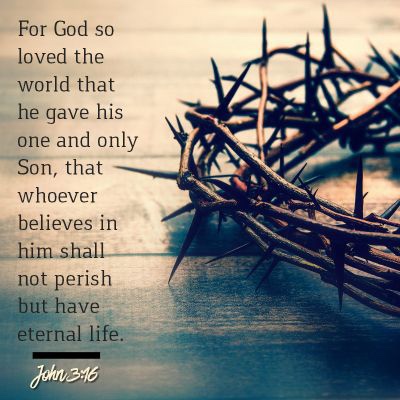
  • “For God loved the world so much that he gave his only Son, so that everyone who believes in him may not die but have eternal life.” John 3:16
  • “No one shows greater love than when he lays down his life for his friends.” John 15:13
  • “But God demonstrates His own love for us in this: While we were still sinners, Christ died for us.” Romans 5:8 
  • “We love because He first loved us.” 1 John 4:19
  • “And the angel answering, said to her, ‘The Holy Spirit will come upon you, and the power of the Most High will overshadow you; therefore also the Holy One being born will be called the Son of God.’” Luke 1:35 
  • “All this took place to fulfill what the Lord had said through the prophet:‘The virgin will conceive and give birth to a son, and they will call him Immanuel’ (which means ‘God with us’).” Matthew 1:22-23 

The Passion of Christ is unconditional love on display in living color. Who is this? He’s the savior of the world.

Share this:

  • Click to share on X (Opens in new window) X
  • Click to share on WhatsApp (Opens in new window) WhatsApp
  • More
  • Click to share on Facebook (Opens in new window) Facebook
  • Click to print (Opens in new window) Print
  • Click to email a link to a friend (Opens in new window) Email
  • Click to share on LinkedIn (Opens in new window) LinkedIn
  • Click to share on Reddit (Opens in new window) Reddit
  • Click to share on Pinterest (Opens in new window) Pinterest
  • Click to share on X (Opens in new window) X
Like Loading...

Lent Day 33: For God So Loved…

26 Friday Mar 2021

Posted by Janean Tinsley in Lent

≈ Leave a comment

Tags

God, Jesus Christ, Lent

And they went to a place called Gethsemane. And he said to his disciples, “Sit here while I pray.” And he took with him Peter and James and John, and began to be greatly distressed and troubled. And he said to them, “My soul is very sorrowful, even to death. Remain here and watch.” And going a little farther, he fell on the ground and prayed that, if it were possible, the hour might pass from him. And he said, “Abba, Father, all things are possible for you. Remove this cup from me. Yet not what I will, but what you will.” And he came and found them sleeping, and he said to Peter, “Simon, are you asleep? Could you not watch one hour? Watch and pray that you may not enter into temptation. The spirit indeed is willing, but the flesh is weak.” And again he went away and prayed, saying the same words. And again he came and found them sleeping, for their eyes were very heavy, and they did not know what to answer him. And he came the third time and said to them, “Are you still sleeping and taking your rest? It is enough; the hour has come. The Son of Man is betrayed into the hands of sinners. Rise, let us be going; see, my betrayer is at hand.”
— Mark 14:32-42

From now until the end of Holy Week, the verses which begin each devotion will be the telling of the single greatest event in history. It’s something we need to constantly hear because the foundation of our faith is being buried more and more all of the time. No matter how much some people want to change the very nature of Christianity, the truth can never be lost because darkness will never defeat the Light.

I worry sometimes, however, if the false prophets have planted so many seeds of doubt that your faith is shaken. Do you struggle to believe God truly loves you – regardless of what you’ve ever done or said? As difficult as it is, you must know that it’s truth.

Are you family with the story of Gomer? She is known to us as a prostitute in the book of Hosea. Hosea was Gomer’s husband. Although Gomer left him, their children, and sold herself for money, Hosea found her, fought for her, and bought her back. You see, Hosea didn’t see her as a prostitute. He saw her as his beloved bride, the mother of his children, the one worth fighting for.

In our culture today, too many discount the Bible as useless stories. But these historical narratives are our stories. We feel much of the same things. So this story of Gomer is worth looking at because we can relate. Gomer would have been tossed aside, considered worthless. But because of Hosea’s love for her, he saw who she really was and did everything to get her back.

This is a picture of God and us. This story is a foreshadowing of what was to come: when God sent Jesus to pursue us and do everything to win us back. His love goes beyond the ways we turn from Him to do what we want regardless of how it hurts us or others. It goes beyond what our culture says and what we tell ourselves about who we are. We are so loved and sought after by a God who is able to free us now and forever. “For God so loved the world that He gave His only begotten Son, that whoever believes in Him should not perish but have everlasting life.” This is the message we are to take to the world. This is the IT message from God to each of us. He died so you may live!

Share this:

  • Click to share on X (Opens in new window) X
  • Click to share on WhatsApp (Opens in new window) WhatsApp
  • More
  • Click to share on Facebook (Opens in new window) Facebook
  • Click to print (Opens in new window) Print
  • Click to email a link to a friend (Opens in new window) Email
  • Click to share on LinkedIn (Opens in new window) LinkedIn
  • Click to share on Reddit (Opens in new window) Reddit
  • Click to share on Pinterest (Opens in new window) Pinterest
  • Click to share on X (Opens in new window) X
Like Loading...

Lent Day 32: Jesus Had To Die

25 Thursday Mar 2021

Posted by Janean Tinsley in Lent

≈ Leave a comment

Tags

faith, God, Jesus Christ, Lent, sin

And they went to a place called Gethsemane. And he said to his disciples, “Sit here while I pray.” And he took with him Peter and James and John, and began to be greatly distressed and troubled. And he said to them, “My soul is very sorrowful, even to death. Remain here and watch.” And going a little farther, he fell on the ground and prayed that, if it were possible, the hour might pass from him. And he said, “Abba, Father, all things are possible for you. Remove this cup from me. Yet not what I will, but what you will.” And he came and found them sleeping, and he said to Peter, “Simon, are you asleep? Could you not watch one hour? Watch and pray that you may not enter into temptation. The spirit indeed is willing, but the flesh is weak.” And again he went away and prayed, saying the same words. And again he came and found them sleeping, for their eyes were very heavy, and they did not know what to answer him. And he came the third time and said to them, “Are you still sleeping and taking your rest? It is enough; the hour has come. The Son of Man is betrayed into the hands of sinners. Rise, let us be going; see, my betrayer is at hand.”
— Mark 14:32-42

As Lent draws near, the resurrection is on my mind. But you can’t have the resurrection without a death. So this question must be answered. Why did Jesus die?

We know from scripture that Jewish leaders plotted against him, Judas betrayed him, Herod and Pilate tried him, and the Roman soldiers executed him. But that’s not the real reason. As Acts 2:23 says, Jesus was “handed over by God’s deliberate plan and foreknowledge.”

Christ died for sins once for all, the righteous for the unrighteous, to bring you to God. (1 Pet. 3:18) The purpose of bringing us to God implies that, prior to Jesus dying, we were far away. “You who once were far away have been brought near through the blood of Christ” (Eph. 2:13).

Friends, our sin needed to be dealt with to bring us near: “Christ died for sins” (1 Pet. 3:18). The Bible does not mince words when it comes to human disobedience and its consequences. Hear that again. The Bible does not mince words when it comes to human disobedience and its consequences. Paul says in Romans 6:23 that “the wages of sin is death.” All humans stand condemned before God; our sins separate us from him whose character is pristine holiness and perfect justice. We are not in line with God when sin is left unaccounted.

To bring us near to God, “Christ died for sins, the righteous for the unrighteous” (1 Pet. 3:18). If “the unrighteous” is all of us, “the righteous” is Jesus himself. The one who “knew no sin, became sin” (2 Cor. 5:21)—our sin—so that we might receive mercy. There is simply no way to be a Christian without this understanding.

The New Testament tells us that Jesus died in our place. He paid the price for our redemption when he “gave his life as a ransom in the place of many” (Mark 10:45). Jesus reconciled us to God by bearing our sins himself (1 Pet. 2:24). “God presented Christ as a sacrifice of atonement through the shedding of his blood” (Rom. 3:25), exhausting God’s wrath against our unrighteousness. It is the only way we are redeemed.

Jesus’s death in our place is in accordance with the Old Testament Scriptures. His death fulfills the old covenant sacrifices, such as the sin offering, the Passover lamb, and the scapegoat of the Day of Atonement. He’s the Suffering Servant who was “pierced for our transgressions” (Isa. 53:5).

God’s love is all over that Holy Week. From the time Jesus entered the city to a chorus of hallelujahs to moment he took his final breath, God’s eternal love is profoundly evident. At the cross, we see the climax of God’s covenants with Israel, and we witness the final and dramatic proof of his love and justice.

Christ’s death puts beyond all doubt the fact that God loves us. It assures us that no matter what life throws at us, we can trust that “he who did not spare his own Son, but gave him up for us all . . . will also graciously give us all things” (Rom. 8:32).

At the cross we see not only God’s love, but the seriousness with which he takes our sin. “God presented Christ as a sacrifice of atonement . . . to demonstrate his justice” (Rom. 3:25–26).

God doesn’t forgive us by turning a blind eye to our sin or by overlooking it. Forgiveness is costly to the one against whom the wrong has been done.

Honestly, where would we be if God had not sent his Son to die for us? Without the cross, we’d be “darkened in our understanding of God and alienated from the life of God” (Eph. 4:18).

The death of Jesus is for life, not just for Easter. The death of Jesus changes everything. As you prepare to take the final few steps of Lent, join Paul in saying, “I will never boast about anything except the cross of our Lord Jesus Christ” (Gal. 6:14). Praise God!!

Share this:

  • Click to share on X (Opens in new window) X
  • Click to share on WhatsApp (Opens in new window) WhatsApp
  • More
  • Click to share on Facebook (Opens in new window) Facebook
  • Click to print (Opens in new window) Print
  • Click to email a link to a friend (Opens in new window) Email
  • Click to share on LinkedIn (Opens in new window) LinkedIn
  • Click to share on Reddit (Opens in new window) Reddit
  • Click to share on Pinterest (Opens in new window) Pinterest
  • Click to share on X (Opens in new window) X
Like Loading...

Lent Day 31: God’s Heart

24 Wednesday Mar 2021

Posted by Janean Tinsley in Lent

≈ Leave a comment

Tags

Jesus Christ, Lent, pain

Then Judas Iscariot, who was one of the twelve, went to the chief priests in order to betray him to them. And when they heard it, they were glad and promised to give him money. And he sought an opportunity to betray him. And on the first day of Unleavened Bread, when they sacrificed the Passover lamb, his disciples said to him, “Where will you have us go and prepare for you to eat the Passover?” And he sent two of his disciples and said to them, “Go into the city, and a man carrying a jar of water will meet you. Follow him, and wherever he enters, say to the master of the house, ‘The Teacher says, Where is my guest room, where I may eat the Passover with my disciples?’ And he will show you a large upper room furnished and ready; there prepare for us.” And the disciples set out and went to the city and found it just as he had told them, and they prepared the Passover. And when it was evening, he came with the twelve. And as they were reclining at table and eating, Jesus said, “Truly, I say to you, one of you will betray me, one who is eating with me.” They began to be sorrowful and to say to him one after another, “Is it I?” He said to them, “It is one of the twelve, one who is dipping bread into the dish with me. For the Son of Man goes as it is written of him, but woe to that man by whom the Son of Man is betrayed! It would have been better for that man if he had not been born.” — Mark 14:10-21

We are quite close to the beginning of Holy Week. A lot happened during that week. It went from joy to tragedy to triumph. We should all be feeling the coming anticipation. I hope as the week draws near, you are feeling closer to Jesus, perhaps more than ever before.

Hesed is found some 250 times in the Old Testament. Many biblical words such as mercy, compassion, love, grace, and faithfulness relate to the Hebrew word hesed (חֶסֶד), but none of these completely summarize the concept. Hesed is not merely an emotion or feeling but involves action on behalf of someone who is in need. Hesed describes a sense of love and loyalty that inspires merciful and compassionate behavior toward another person. Hesed surpasses ordinary kindness and friendship. It is the inclination of the heart to show “amazing grace” to the one who is loved. Hesed runs deeper than social expectations, responsibilities, fluctuating emotions, or what is deserved or earned by the recipient. Hesed finds its home in committed, familial love, and it comes to life in actions. The message of the gospel—God’s act of forgiveness and salvation in Jesus—is rooted in hesed.

The deepest longing of our soul is the all-satisfying hesed of God—not in the abstract, but first-hand knowledge and experience, a tasting of God’s hesed. Have you been delivered by the hand of God, tasted his mercy, seen his power, heard his word, felt his presence? The degree to which we have known the presence and power of God is the degree to which we get a sense for what it meant that Jesus was the Son of God, and how devastating it must have been to bear the judgment of God against sin. All lament
leads us to Jesus, in whom our sorrow and pain finds ultimate identification and hope.
The culmination of good and evil came down to Jesus was on the cross. The physical pain was excruciating, yet it was nothing compared to the shock and horror of being forsaken by the Father. You see, the wrath of God was poured out on Jesus, the whole weight of the world’s guilt bearing down on his shoulders. This is the wrath we should have experienced. This is the pain we should have felt. But Jesus felt the pain and he internalized our shame. He, who knew no sin, became sin (2 Corinthians 5:17).

In that moment, he took up the lament of King David: “My God, my God, why have you forsaken me?” (Mark 15:34). When he said this he not only took our sin upon himself, but also voiced all our laments. For underlying all our laments are two questions: “God, where are you?” and, “God, if you love me, then why?” For the first time in all of eternity, Jesus felt the absence of the Father’s presence and the uncertainty of his love. God could not look upon the sin that Jesus became.

Why did it have to be this way? If Jesus was God’s answer to ages of laments, how did he end up in the most lamentable position of all?
One approach to the question is to consider why so many ultimately rejected him, even his own people. The disciples, too, regularly stumbled over their expectations. They hoped the Messiah would conquer the Romans and vindicate Israel. Instead, he predicted the destruction of the temple and died for the Romans. They wanted the Messiah to give them answers. Jesus gave himself. He predicted his own destruction, and then endured it in order to conquer our real enemies: Satan, sin, and death. Jesus did not take away lamenting. He took it up. Having endured the cross, he secured for us the one thing we need more than solutions: the presence of God.
“Lament is the path that takes us to the place where we discover that there is no complete answer to pain and suffering, only Presence” (Michael Card).

Share this:

  • Click to share on X (Opens in new window) X
  • Click to share on WhatsApp (Opens in new window) WhatsApp
  • More
  • Click to share on Facebook (Opens in new window) Facebook
  • Click to print (Opens in new window) Print
  • Click to email a link to a friend (Opens in new window) Email
  • Click to share on LinkedIn (Opens in new window) LinkedIn
  • Click to share on Reddit (Opens in new window) Reddit
  • Click to share on Pinterest (Opens in new window) Pinterest
  • Click to share on X (Opens in new window) X
Like Loading...

Lent Day 30: Resurrection Power

23 Tuesday Mar 2021

Posted by Janean Tinsley in Lent

≈ 1 Comment

Tags

God, Jesus Christ, Lent

My goal is to know Him and the power of His resurrection and the fellowship of His sufferings, being conformed to His death, assuming that I will somehow reach the resurrection from among the dead. —Philippians 3:10-11

“What if we lived everyday in resurrection perspective? Instead of waking up thinking of all we need to do today, let’s wake up thinking of what He’s already done today. Instead of focusing on what was, let’s focus on what is. Instead of being stuck on what has died, let’s start with Who is alive. Instead of starting with ‘I’m trapped in fear’, let’s start with ‘I’m going to step out in faith.’”

I read these words today by Pastor Louie Giglio and they made me really ponder. How often am I focused on what was instead of what is? It’s quite easy to do. There’s no fear of the past.

I can’t think of a better time than Lent to really reflect on this. There have been lots of things in the past that I can stay fixated on. But when that happens, we lose focus on Jesus. We cannot really embrace our resurrection power if we are clinging to fears and failures of our worldly life. Quite frankly, we have to choose.

Jesus Christ paid the price for all humanity’s sins. He took them all upon himself. And then he conquered death so we may live! Why would any of us choose to ignore the resurrection power within us? Isn’t it time to say “Yes, Jesus, I choose you!!”?

Share this:

  • Click to share on X (Opens in new window) X
  • Click to share on WhatsApp (Opens in new window) WhatsApp
  • More
  • Click to share on Facebook (Opens in new window) Facebook
  • Click to print (Opens in new window) Print
  • Click to email a link to a friend (Opens in new window) Email
  • Click to share on LinkedIn (Opens in new window) LinkedIn
  • Click to share on Reddit (Opens in new window) Reddit
  • Click to share on Pinterest (Opens in new window) Pinterest
  • Click to share on X (Opens in new window) X
Like Loading...

Lent Day 29: It’s fine. Everything’s fine.

22 Monday Mar 2021

Posted by Janean Tinsley in Lent, mental health

≈ Leave a comment

Tags

faith, God, Jesus Christ, Lent, pain, sin

I cry aloud to God, aloud to God, that he may hear me. In the day of my trouble I seek the Lord; in the night my hand is stretched out without wearying; my soul refuses to be comforted. I think of God, and I moan; I meditate, and my spirit faints. You keep my eyelids from closing; I am so troubled that I cannot speak. —Psalm 77

“I’m fine. It’s fine. Everything is fine.” So many of my clients have recited these words for so long they have forgotten how to acknowledge their real pain. I have found that people will quietly endure pain described in this psalm for weeks, months, or even years on end, until they finally become overwhelmed. This often takes the form of a divorce, an arrest, or a suicide attempt.

What do we do during the “day of trouble?” We cry aloud to God to find comfort, but for some reason, “my soul refuses to be comforted.” We lose sleep, and we cannot even describe the anguish we are in. On top of all of this, we experience a theological crisis: “God promised to never leave or forsake me, but now he has turned his back on me.”

Occasionally, clients will reveal that they have reached out to God during dark times, but they felt all they received was silence. They asked for relief from the pain but they feel forgotten. They are praying like they’ve never prayed before, but still their pain overwhelms. “Has God forgotten to be gracious?” (v. 9).

Perhaps that is the whole point. Scripture reminds us over and over that God is merciful and abounding in steadfast love (Exodus 34:6–7), that God never changes (Hebrews 13:8), and that God desires an intimate relationship with his people (Isaiah 43:1; Jeremiah 31:33). Scripture assures us that God is our everlasting hope. Because of these promises, I do not believe that God causes our suffering. I do believe He can certainly use our suffering so that we might “cry aloud to God,” “think of God,” and “meditate and search my spirit.” The psalmist reminds us that even amid our suffering, it is out of God’s character to spurn or abandon, to be unloving or to withhold compassion. Even on our darkest days, God is inseparable from his goodness and mercy. For that, as we draw ever closer to the cross, we can persevere.

Share this:

  • Click to share on X (Opens in new window) X
  • Click to share on WhatsApp (Opens in new window) WhatsApp
  • More
  • Click to share on Facebook (Opens in new window) Facebook
  • Click to print (Opens in new window) Print
  • Click to email a link to a friend (Opens in new window) Email
  • Click to share on LinkedIn (Opens in new window) LinkedIn
  • Click to share on Reddit (Opens in new window) Reddit
  • Click to share on Pinterest (Opens in new window) Pinterest
  • Click to share on X (Opens in new window) X
Like Loading...

Lent Day 28: A Gift

21 Sunday Mar 2021

Posted by Janean Tinsley in Lent

≈ Leave a comment

Tags

God, Jesus Christ, Lent, pain

Now it came to pass, when the time had come for Him to be received up, that He steadfastly set His face to go to Jerusalem, and sent messengers before His face. And as they went, they entered a village of the Samaritans, to prepare for Him. But they did not receive Him, because His face was set for the journey to Jerusalem. And when His disciples James and John saw this, they said, “Lord, do You want us to command fire to come down from heaven and consume them, just as Elijah did?” But He turned and rebuked them, and said, “You do not know what manner of spirit you are of. For the Son of Man did not come to destroy men’s lives but to save them.” And they went to another village. — Luke 9:51-56

Lent is a time where we give lots of thought to the suffering that Jesus endured. For us, however, we know the outcome—an empty tomb. It was different for the disciples; it was a testing of faith. We see what God was doing in the garden of Gethsemane, and we know the great necessity of the cross of Christ. Otherwise, we too would fall asleep and run for safety. It’s easy to look back.

“When the days drew near for him to be taken up, he set his face to go to Jerusalem” (Luke 9:51). Knowing what had to happen, Jesus stayed the course. If we are to have a serious reflection on his suffering, we must account for the fact that our Lord looked forward, never back.
We look back all the time, longing for comforts past, wondering what might have been. I’ve done it even as recently as reflecting on the lost year of Covid. Even though we have taken up life with Jesus, seasons of suffering challenge our resolve and fix our attention to how things used to be or how we imagine they might be. Our hunger for restoration and relief from burdens turns our heart to the past, but Jesus has only an eye for what is set before him.

The Isrealites experienced this in the 40 years they spent wandering in the desert. They argued with Moses, idealizing their life in Egypt and questioning the goodness of the Lord. They complained about the Lord’s provision, not because he didn’t provide, but because they weren’t content with what he provided. Oh how that truth can sting!

The paradox of suffering is that it is actually a gift – one we might like at times to give back – but a gift nonetheless. God gives us suffering as a way of giving us Himself, for it is in our suffering that we become acutely aware of His presence and power. Difficulties empty us of our self-reliance so that we might soak in what it means that we are children of God, chosen by God and in covenant relationship with Him—the very covenant purchased by Christ’s blood.
The Israelites in the wilderness and Christ on the cross both stand as a testament, old and new, that God does not forsake His people.

Ultimately, suffering is about learning to receive whatever God has placed in our hands as a blessing. Honestly, that is quite difficult in painful moments. For Jesus, the journey to Jerusalem was a gift. Gethsemane and Golgotha were gifts. They were not easy gifts to receive, which is why he had to say, “Not my will, but yours” (Mark 14:36). And it is why he taught us to pray, “Your kingdom come, your will be done” (Matthew 6:10), because if we are not looking for God’s kingdom come, we always be looking back for our kingdom gone.

The season of Lent is a gift. Take time to receive it.

Share this:

  • Click to share on X (Opens in new window) X
  • Click to share on WhatsApp (Opens in new window) WhatsApp
  • More
  • Click to share on Facebook (Opens in new window) Facebook
  • Click to print (Opens in new window) Print
  • Click to email a link to a friend (Opens in new window) Email
  • Click to share on LinkedIn (Opens in new window) LinkedIn
  • Click to share on Reddit (Opens in new window) Reddit
  • Click to share on Pinterest (Opens in new window) Pinterest
  • Click to share on X (Opens in new window) X
Like Loading...

Lent Day 27: Cover Me

19 Friday Mar 2021

Posted by Janean Tinsley in Lent

≈ 1 Comment

Tags

faith, God, Jesus Christ, Lent, sin

And He said to Adam, “Because you listened to your wife’s voice and ate from the tree about which I commanded you, ‘Do not eat from it’: The ground is cursed because of you. You will eat from it by means of painful labor all the days of your life. It will produce thorns and thistles for you, and you will eat the plants of the field. You will eat bread by the sweat of your brow until you return to the ground, since you were taken from it. For you are dust, and you will return to dust.” Adam named his wife Eve because she was the mother of all the living. The Lord God made clothing out of skins for Adam and his wife, and He clothed them. The Lord God said, “Since man has become like one of Us, knowing good and evil, he must not reach out, take from the tree of life, eat, and live forever.” So the Lord God sent him away from the garden of Eden to work the ground from which he was taken. He drove man out and stationed the cherubim and the flaming, whirling sword east of the garden of Eden to guard the way to the tree of life. — Genesis 3:17-24

When the world was created, God designed paradise for Adam and Eve. But unfortunately our beautiful paradise was destroyed by the introduction of sin. God pronounced judgment on sin, thus leaving us to feel consequences such as shame. In Genesis 3:21: “And the LORD God made for Adam and for his wife garments of skins and clothed them.”

God looked at their clothes and said, “Nope. That’s not going to work.” The clothes that Adam and Eve had made for themselves were not adequate covering to face the new fallen world in which they were now living. Sin had opened their eyes, but not in a good way. Sin laid them bare, left them feeling exposed. For the first time, they realized they were naked. So, they sewed fig leaves together and made themselves loincloths, single-piece garments. And ever since, the human race has engaged in an enterprise of self-covering that always falls short.

How often do we try to cover ourselves so that others cannot see our sinfulness? Covering sin is not simple, quick, and easy. Covering sin is costly, painful … bloody. Sin produces suffering and death, so the cost of covering sin involves suffering and death. It involves sacrifice.

Did Adam and Eve think they could just sweep things under the rug, tidy up the disastrous mess they had made without any cost, without any price being paid? Do we think that? When we try to cover our own sin, we are engaging in a futile self-salvation project. We are essentially saying, “I can atone for my own sin.”
God makes it very clear that sin requires the ultimate sacrifice. And then because of His profound love, he sent that sacrifice. Jesus Christ suffered and bled and died so that we could be adequately clothed—clothed in his righteousness. The blood of Jesus is our covering. Just like Adam and Eve, we can’t cover our own sin. God must do that, and he has made that possible with the costly sacrifice of his own Son. In light of this: “I will greatly rejoice in the LORD; my soul shall exult in my God, for he has clothed me with the garments of salvation; he has covered me with the robe of righteousness” (Is. 61:10).

Are you ready to have your sins covered by Jesus Christ? If so, let’s talk.

Share this:

  • Click to share on X (Opens in new window) X
  • Click to share on WhatsApp (Opens in new window) WhatsApp
  • More
  • Click to share on Facebook (Opens in new window) Facebook
  • Click to print (Opens in new window) Print
  • Click to email a link to a friend (Opens in new window) Email
  • Click to share on LinkedIn (Opens in new window) LinkedIn
  • Click to share on Reddit (Opens in new window) Reddit
  • Click to share on Pinterest (Opens in new window) Pinterest
  • Click to share on X (Opens in new window) X
Like Loading...

Lent Day 26: Promises Kept

18 Thursday Mar 2021

Posted by Janean Tinsley in Lent

≈ Leave a comment

Tags

faith, God, Jesus Christ, Lent, pain

Abram was ninety-nine years old when the Lord appeared to him again and said, “I am God All-Powerful. If you obey me and always do right, I will keep my solemn promise to you and give you more descendants than can be counted.” Abram bowed with his face to the ground, and God said: I promise that you will be the father of many nations. That’s why I now change your name from Abram to Abraham. I will give you a lot of descendants, and in the future they will become great nations. Some of them will even be kings. I will always keep the promise I have made to you and your descendants, because I am your God and their God. — Genesis 17:1-7

Can we know for sure that God keeps his promises? It’s very easy to say, “I promise,” but then waffle if it becomes too difficult to keep. Could this ever happen with God?

God made a series of promises to Abraham: He promised to give him many descendants and make him into a great nation, to bless him and make his name great, and to bless all the families of the earth through him. He also promised to give the descendants of Abraham a particular land. But Abraham, like any of us, was unsure. How could such promises be kept?

Abraham asked God some questions: “O Lord GOD, what will you give me, for I continue childless,” and, “O Lord GOD, how am I to know that I shall possess [the land]” (15:2)?

These are fair questions. Wouldn’t you wonder the same? In answer to these questions, God did something that seems strange to us in our cultural and historical context. He had Abraham sacrifice some animals. He was told to cut them in half and then lay the pieces of the animals across from each other. Then Abraham fell into a deep sleep. During this sleep, a smoking fire pot and flaming torch passed between the pieces. This ceremony, common in the ancient Near East, was called “cutting a covenant.”

Two parties entering into a binding agreement or covenant with one another would cut an animal in pieces and pass between the pieces to inaugurate the covenant. The ceremony signified that the two parties were promising to fulfill the terms of the covenant. If they failed to keep the promises of the covenant, they were saying, “May we become like this animal.” It’s like they were saying, “I promise. Cross my heart and hope to die.” The sacrificial ceremony was literally a pledge of one’s life to keep the promises of the covenant.

That’s quite a promise! So when the smoking fire pot and flaming torch (which were symbols of God’s presence) passed between the pieces of dead animals, God himself was assuming responsibility to make sure that all the promises of the covenant were kept. O. Palmer Robertson writes, “The solemn ceremony of self-malediction provides the Lord’s reply [to Abraham’s questions]: ‘I promise. I solemnly commit myself as Almighty God. Death may be necessary. But the promises of the covenant shall be fulfilled’.”

Y’all! That thought should have chills running up your spine! God was saying, “May I be torn to pieces like these animals if the covenant between me and Abraham’s descendants is broken.”

Abraham’s descendants would be unfaithful to God and his covenant. But, God kept his promise. He had sworn on his life to bless Abraham. So, the blessing for Abraham and his descendants (which includes us as Christians) was made possible by the curse of death that fell on Jesus.

In Jesus, God the Son took on flesh, and his flesh was torn apart in order to keep his covenant promises to Abraham (and us). Jesus, the covenant- keeper, sacrificially offered himself for us: “Take, eat; this is my body. Drink of this cup, all of you, for this is my blood of the covenant, which is poured out for many for the forgiveness of sins” (Matthew 26:26-28). The blood of Jesus, the sacrificial Lamb of God, is our assurance that God keeps his promises.

Share this:

  • Click to share on X (Opens in new window) X
  • Click to share on WhatsApp (Opens in new window) WhatsApp
  • More
  • Click to share on Facebook (Opens in new window) Facebook
  • Click to print (Opens in new window) Print
  • Click to email a link to a friend (Opens in new window) Email
  • Click to share on LinkedIn (Opens in new window) LinkedIn
  • Click to share on Reddit (Opens in new window) Reddit
  • Click to share on Pinterest (Opens in new window) Pinterest
  • Click to share on X (Opens in new window) X
Like Loading...

Lent Day 25: Holy Discomfort

17 Wednesday Mar 2021

Posted by Janean Tinsley in Lent

≈ Leave a comment

Tags

faith, Jesus Christ, Lent, pain

I’m posting a devotion from Louie Giglio today. It is so beautifully stated. Enjoy.

Faith thrives in holy discomfort. The greatest moments in life can often result from some of the most uncomfortable decisions being made.

In fact, the gospel is rooted in a place of discomfort — Christ’s discomfort. The cross brought pain to Jesus in the same breath it brought freedom to us. We are alive because of Christ’s discomfort. We can fully live because of the rugged cross. Christ endured what was uncomfortable so we could become the sons and daughters of God. This is our story. People ask, “What does it mean to be a Christian?” It means to put our faith in the work of Jesus. What is the work of Jesus? That He came to the earth. He lived. He was crucified. He was resurrected. He ascended into heaven. He sent the Spirit of God, and He’s now living inside of us. This is the gospel. This is what we believe, and it all hinges around a very uncomfortable moment.

Somehow as a people of God, if we’re not careful, we can sing songs about the uncomfortable moments of Jesus while we live in the very comfortable moment of us. Thank you, Jesus — you took it all. But we forget what it truly means to identify with Christ. The Bible tells us that as Christ followers, we identify with His crucifixion just as much as we identify with His resurrection.

Paul wrote in Galatians 2:20, “I have been crucified with Christ and I no longer live, but Christ lives in me. The life I now live in the body, I live by faith in the Son of God, who loved me and gave himself for me.” That means our dreams and plans become merged with Christ’s when we remember that death and life are both part of Christ’s work.

Can you name anything in the life of faith that’s completely comfortable? Resisting sin? Nope, not comfortable. Being transformed into the image of Christ? No, not comfortable either. Joining with Christ on His mission? No. Wondrous, but not always comfortable. That’s why Paul says in 2 Corinthians 12:10, “For Christ’s sake, I delight in weaknesses, in insults, in hardships, in persecutions, in difficulties. For when I am weak, then I am strong.”

Share this:

  • Click to share on X (Opens in new window) X
  • Click to share on WhatsApp (Opens in new window) WhatsApp
  • More
  • Click to share on Facebook (Opens in new window) Facebook
  • Click to print (Opens in new window) Print
  • Click to email a link to a friend (Opens in new window) Email
  • Click to share on LinkedIn (Opens in new window) LinkedIn
  • Click to share on Reddit (Opens in new window) Reddit
  • Click to share on Pinterest (Opens in new window) Pinterest
  • Click to share on X (Opens in new window) X
Like Loading...
← Older posts
Newer posts →

Topics

Facebook

Facebook

Recent Posts

  • A Turning Point
  • What Is Church Hurt? Breaking the Silence on Spiritual Wounds
  • Your Tears Matter
  • What’s Wrong With The World?
  • Betrayal Trauma and the Church

Archives

  • September 2025
  • August 2025
  • July 2024
  • August 2022
  • June 2022
  • May 2022
  • April 2022
  • February 2022
  • January 2022
  • September 2021
  • August 2021
  • July 2021
  • June 2021
  • May 2021
  • April 2021
  • March 2021
  • February 2021
  • January 2021
  • December 2020
  • November 2020
  • October 2020
  • September 2020
  • July 2020
  • June 2020
  • May 2020
  • April 2020
  • March 2020
  • January 2020
  • December 2019
  • August 2019
  • February 2019
  • May 2018
  • April 2016
  • December 2015
  • September 2015
  • May 2015
  • January 2015
  • September 2014
  • January 2014
  • December 2013
  • November 2013
  • August 2013
  • July 2013
  • September 2012
  • August 2012
  • May 2012
  • March 2012
  • January 2012
  • November 2011
  • October 2011
  • September 2011
  • RSS - Posts
  • RSS - Comments

Faithful Servant Ministries

Faithful Servant Ministries

Blog Stats

  • 13,801 hits

Blog at WordPress.com.

  • Subscribe Subscribed
    • Lord, have mercy…
    • Join 91 other subscribers
    • Already have a WordPress.com account? Log in now.
    • Lord, have mercy…
    • Subscribe Subscribed
    • Sign up
    • Log in
    • Report this content
    • View site in Reader
    • Manage subscriptions
    • Collapse this bar
 

Loading Comments...
 

    %d